Tuesday, October 09, 2012

What a difference a good cover makes.

This is my best seller.
Out soon.


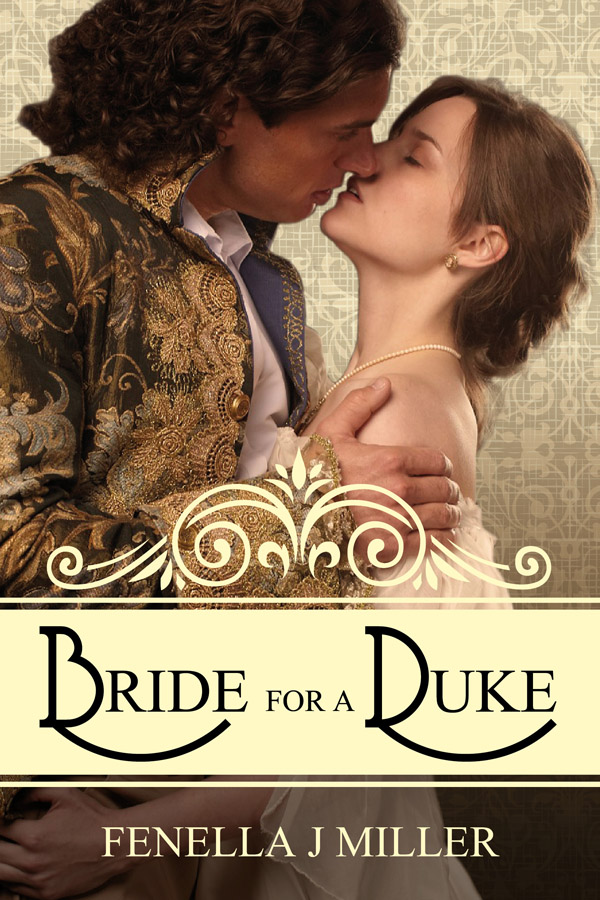
I've recently had  all the covers for my 'Duke' books designed by Jane Dixon Smith. She used the same photos I'd chosen as I love the models. My sales almost doubled the first week these new covers came on line. What a difference a professional cover makes.
In future I shall use Jane for all my covers - I wish I'd known about her before I started indie-publishing my Regency books.
This book is my latest title.
This is the first of the 'Duke' books.


My Weekly Pocket Novels are re-branding with modern covers - I'm sure this will improve their sales as well.
The Duke's Challenge will be out by the end of the month. I hope not having a couple on the cover won't reduce sales.
I apologize for the brevity of my post this month but I have a broken ankle and ruptured ligaments and the medication I'm taking makes me more dozy than usual.


Although this is a Regency blog I would like to tell you that the first of my WW2 books, Barbara's War written under the name F J Miller , is now available as a Kindle and paperback.
best wishes
Fenella

Sunday, October 07, 2012

The National Trust's Movie Map!


The National Trust has recently published a movie map of all their sites that have hosted film shoots since 1960.  You can see it here. It's fascinating to see the number and variety of films that have been shot using National Trust sites. Not all the films are costume dramas. The long gallery, library and backstairs at Osterley Park featured in the latest Batman film as did the Henrhyd Falls in Wales, which doubled for a waterfall scene set in remote jungle! Ham House in Richmond was used to represent a grand New York mansion in the sci-fi adventure John Carter and Antony in Cornwall, which is a gorgeous and quirky little house, was the setting for Alice in Wonderland.

Unsurprisingly, though, it is the costume dramas that feature most in the roll call of famous locations. From Pride and Prejudice at Basildon Park to The Duchess at Kedelston Hall, the grand houses of the National Trust provide the opulent interiors and impressive scenery need for epic style productions. My personal favourite though is Great Chalfield Manor in Wiltshire, which was used as the Boleyn family home in The Other Boleyn Girl. It’s not a grand house, more a cosy medieval manor complete with moat and topiary gardens! I could easily imagine living there. (Oh, I wish!)

It's great that villages like Lacock (used in the TV series Cranford) and even cities like Bath can also feature in period dramas so you might be out shopping and stumble across a film crew! Do you have a favourite place that has been used as a film set or is there anywhere you’ve seen in a film that you would like to visit?

Friday, October 05, 2012

Following the drum: the women in Wellington’s army


The glamour quotient at the HNS Conference in London last weekend was greatly enhanced by the presence of a number of soldiers from the Napoleonic Association, a re-enactment society – all of whom looked splendid in their scarlet uniforms.

With them was Maureen Lancaster, whose husband Ian is a sapper in the East Kent Buffs. Maureen as been with them as an army wife for twenty years, and she made not only her own costume but her husband and son Stephen’s, too. Stephen joined as a drummer boy when he was only thirteen, so a love of military history is obviously in the family.

We discussed the role of ordinary women in Wellington’s army. Officially, only six wives per hundred men were allowed to follow the drum, all chosen by lot. In Maureen’s view, without the women, the whole campaign would have ground to a halt. Women did the washing, the mending and the cooking. A contemporary print shows a couple of women washing garments in a river, whilst another hangs the clothes on a makeshift washing-line. Nearby a cauldron hangs over an open fire.

Women often went ahead of the column (many of them acquired a donkey) to buy what they could in the next village before the quartermaster got there, which was strictly forbidden and heavily punished. The women took no notice: they were determined to have a meal waiting for their husbands at the end of the day, and doubtless the cauldron in the print contained a nourishing stew for their dinner.

Official rations were sparse: only two meals per day were allowed for: breakfast at 7.30 and a meal at noon. Official women’s rations were half that of the men; unofficial women – of whom there were hundreds - were entitled to nothing at all. Prices could be ludicrously high with a loaf of bread costing half a crown (12½p).

The ordinary soldiers’ rates of pay were abysmal. An infantry sergeant received from 1s 6d to 2s per day (7½ - 10p) and a private got merely 8d (about 3½p). Even a loaf of bread would be beyond the reach of many. As Maureen said, ‘Many wives became very good at pilfering.’ They had to be.

The general practice was to billet the soldiers in the nearest village or town. If none were nearby, the men had to shift as well as they could: some cut down branches and erected huts, others just wrapped themselves in their army blanket and shivered. Later on in the campaign – which suffered some horrendous weather - the army eventually supplied tents.

I asked Maureen what happened if your husband was killed. ‘You were allowed three days to re-marry, otherwise you’d lose your rations’ entitlement,’ she replied. When I exclaimed with horror, she added, ‘It wasn’t unusual for soldiers to sell their wives.’

Of course, there were plenty of examples of devotion and heroism, too. Soldiers helped carry babies and children if there was no room on the baggage train – which stretched back for miles. And women rushed onto the battlefield, sometimes even before the fighting had stopped, to find their men, tend to their wounds or seek a proper burial.

The East Kent Buffs attends the annual ceremony to commemorate the battle of Albuera on May 16th, 1811. Maureen was so disgusted that the women’s contribution went unrecognized that she took to scattering poppies in the small military cemetery at Elvas in their memory. It has now become a recognized part of the ceremony – and quite right, too.

Photos: Top: Men of the East Kent Buffs
             Centre: Maureen Lancaster, an army wife
             Bottom: Even the underwear is authentic 
Elizabeth Hawksley


Wednesday, October 03, 2012

The Notorious Coale Brothers - two new Sarah Mallory books


I am very excited because I have just received the covers for my two forthcoming  books  - linked because the heroes are identical twins!  The first to be published is Beneath the Major's Scars, which comes out in December, following in January by Behind the Rake's Wicked Wager.


Although the heroes, the notorious Coale brothers, are twins, their stories are very different. Dominic, the younger twin, was a soldier fighting in the Peninsula until he was horrifically wounded and sent back to England to recover.  He turns into a recluse and buys himself a secluded house on Exmoor where he plans to live a solitary existence, until of course, he meets Zelah, a young lady who sees past the rough and damaged exterior to the man beneath. This is a real Beauty and the Beast story, set in a remote and beautiful part of Britain.


Jasper's story couldn't be more different and instead of an isolated house the story takes place amid  the elegance of Regency Bath.  As Viscount Markham, Jasper has always been pursued by ambitious young ladies and their match-making mothers. He has his pick of society's beauties, but none has ever captured his heart. Then he visits Bath and he meets his match in Susannah Prentess, a young lady who has no intention of falling for the wicked rake's charms.  This story was such fun to write, with Susannah leading our hero on a merry dance before they finally realise that they were made for one another. 


These are the two cover pictures and I think they give a flavour of the different stories within – what do you think?

Sarah Mallory/
Melinda Hammond

Sunday, September 23, 2012

'Marry in Haste' - E-book Release


Like Jane’s novels (see post dated 17th September), one of my Regency novellas is getting a new lease of life.  Marry in Haste has been released for Kindle and I’m thrilled to have it out there again, so easily available for download.

This is one of those stories that’s been through a lot.  It was actually the very first thing I ever wrote and started life as a potential Mills & Boon historical.  Back then I was naive enough to think I could “dash off” an M & B novel without any problems, but of course that wasn’t the case and I learned my lesson.  Many years later, I went back to it and (being somewhat wiser) cut it down to novella size.  Luckily it was then accepted for publication by D C Thomson’s My Weekly Pocket Novel series and later as a large print novella.

However, it’s great to be moving with the times and I hope that it will appeal to fans of the Regency genre who perhaps fancy a shorter story to fill the time in between longer ones.  Here is the blurb:-

‘I need to marry, and I need to marry at once!’

When James, Viscount Demarr confides in an acquaintance at a ball one evening, he has no idea that the potential solution to his problems stands so close at hand …

Amelia Ravenscroft is the granddaughter of an earl and is desperate to escape her aunt’s home where she has endured a life of drudgery, whilst fighting off the increasingly bold advances of her lecherous cousin.  She boldly proposes a marriage of convenience.

And Amelia soon proves herself a perfect fit for the role of Lady Demarr­­­. But James has doubts and his blossoming feelings are blighted by suspicions regarding Amelia’s past.

Will they find, all too painfully, that to marry in haste is to repent at leisure?

Buy links:-

Christina Courtenay

Thursday, September 20, 2012

The first romantic novel?

Jane Austen wasn’t the only novelist of the Georgian era. Recently, I’ve been reading through some of the greatest books of the eighteenth century, from Defoe at the beginning, to Fanny Burney at the end. It’s one of the best ways of researching the way people thought and the way they lived in this period, and in any case, it’s huge fun.
Defoe, of course, wrote “Robinson Crusoe,” but he was a prolific novelist and also produced “Moll Flanders” and “Roxanne.” In those days, stories existed, and had since people could speak, but they were fables, or fairy tales, or instructive illustrations to moral tales. When Defoe wrote was many academics consider the first novel, these things existed. So why is this a novel? Because, although there are instructive sermons in the book, it’s about one person, a fictional or fictionalised account, depending on whether you believe he heard about Alexander Selkirk and used him as his inspiration. Most academics cite “Robinson Crusoe” as the first “real” novel, and while there are a few others that could arguably also claim that honour, it’s a convenient place to start, and its publication did mark a new idea and a new way to tell a tale.
The story doesn’t dot about, it follows one man’s story more or less chronologically, and has a definite beginning and end. In the previous eras, stories often rambled, and didn’t really have an end, like the many stories associated with Robin Hood or King Arthur. They had great heroes and gods mingled with men, to tell tales of epic greatness. Novels don’t just have their origin in the more refined parts of society, it is also from the people, and folk tradition, and so is unlike many of the other art forms that were popular at the time. They tell the stories of ordinary people living lives that people of the time would have recognised and identified with. And these books came at a time when there was an upsurge in literacy.
By the end of the eighteenth century, for the first time in hundreds of years, most of the population could read. It’s an astonishing development, pushed on by the spreading of the franchise, the very structure of society changing. And people wanted to be entertained. While novels weren’t cheap, they could be bought in serial form, and they could be read out loud and re-read. They were portable, so a person could carry a book around, and they were something everybody could talk about. Just as the e-reader is changing the way we read and treat books, the advent of the cheap novel changed the way people thought.
So in this context, we don’t just have the improving and sermonising novel, we have books of enormous fun and entertainment. The novels of the eighteenth century are some of the most enjoyable ever written, and because the form was in its infancy, there were many experiments.
In this time, the most common novel was the “picaresque” story, that is, a series of loosely linked adventures with one hero or heroine. We’ve become used to novels having scenes with points to make, but the eighteenth century masters let the story take them where it would. So we have sermons, bawdy scenes, scenes of true poignancy and happiness, too. They are a ride to remember.
The next big thing to hit the world was probably “Pamela,” by Samuel Richardson. This is a series of letters in which a poor but honest servant girl recounts the way she rejects the lewd advances of her master, until eventually, he reforms his rakish ways and marries her.
In  Victorian times, this book would have been held up as the epitome of modest and well behaved behaviour to all young ladies. It’s a great book, and has some fascinating insights into the way people thought and acted then, but not everybody agreed with it. Some critics cried out that it was hypocritical, and that Pamela was taking a lesson from Anne Boleyn, and deliberately withholding the goods until her Mr. B married her and made her a lady. Others denounced it as a chance to write scurrilous near-rape, and titillating the reader in the guise of morality. Well, since Mr. B kidnaps the luckless heroine and lays her under siege until she agrees to sleep with him, they might have a point.
The only voice in the book is Pamela’s. She tells the story, and so we have to trust her to tell the truth. And we can take the person she’s talking to into account, too, a respectable older person she loves and trusts, although there are a few other recipients.
Richardson started the book as an instructive text, but the story took him over. Just as many authors say that happens today, he said it happened to him, and Pamela became a real person to him, and to many of his readers. Take it as a sweet story about a virtuous and shy girl and a man she reforms, and you could almost have the Harlequin Presents story of today.
When it came out in 1740, “Pamela” was a sensation, and this, almost as much as the contents, is why the book is still so important. Without it we might not be reading novels. We might be listening to plays or reading poems for our main entertainment. Well, it’s possible, anyway! But as when anything has huge success, people jump on the bandwagon, with greater or lesser success. Novels followed, and some of them are undoubtedly better. “Tristram Shandy” and “Tom Jones” are two of the greatest novels ever written, bursting with life and still eminently readable today. But “Pamela” came first.
 Two books were written by Fielding as parodies of "Pamela," leading to a famous and avidly watched feud between the two authors. “Shamela” was a straight parody, but Fielding’s first published novel, “Joseph Andrews” parallels Pamela’s story, but instead of Mr. B, who Fielding claims is really called Mr. Booby, it’s a relative, Lady Booby, who victimises her footman, Pamela’s brother. It shows a lot of the bouncy joie-de-vivre and enthusiasm for life that makes Fielding’s later books, even “Clarissa,” so enjoyable. Even when Clarissa, tortured by the rake Lovelace, is in the depths of despair, she’s quite capable of a great big fit of hysterics.
The eighteenth century novel had a joy, a way of savouring life that we might have lost, a way of throwing itself into a project with complete whole-heartedness. We could learn a lot from them.

Lynne Connolly
http://lynneconnolly.com

Wednesday, September 19, 2012

Birthday Present Books

My birthday presents from my husband tend to arrive when he sees something he thinks I'll like, which makes the birthday season a somewhat prolongued one. I've done rather well over the past weeks (only a few months past The Day!) with two books that are so gorgeous I thought I'd share them with you.
The first is the ultimate book on Vauxhall Gardens by David Coke and Alan Borg (Yale Unversity Press).

It is so large and heavy that it isn't so much a coffee table book as one which, with the addition of legs, would make a very servicable table itself. The book covers the entire history of the gardens from 1661 until its closure on July 25th 1859 - the "LAST NIGHT FOR EVER of VAUXHALL" as the posters declaimed.

The illustrations are amazing - plans, prints, caricatures, portraits, tickets and playbills... I particularly liked the collection of prints of Madame Saqui, a French tightrope and slack-rope performer. A dumpy little woman with thick black eyebrows she doesn't look like the formidable gymnast she obviously was, but the illustration of her descent from a mast sixty feet high down an inclined rope 350 feet to the ground (no safety harness!) is just one of the breathtaking images in the book.

The second treasure is The Epicure's Almanack: Eating and Drinking in Regency London, The Original 1815 Guidebook edited by Janet Ing Freeman (The British Library).
At the instigation of the publishers Longmans, Ralph Rylance visted about 650 eating establishments in and around London and produced the first "Good Food Guide". Chop houses, confectioners, coaching inns and gentlemen's clubs are all here
and, beside the clubs, six of them still survive in more or less the same premises: The Seven Stars (53, Carey Street), The Bell (now the Old Bell) (96, Fleet Street), The Cheshire Cheese (145 Fleet Street), The George & Vulture (George Yard), Simpson's (Ball Court) and the Cock & Woolpack (6, Finch Lane.)
Rylance also visted all the markets and provides a survey of seasonal foods.
With Janet Freeman's detailed notes it is possible to discover the recipe for Alamode beef - a staple of many a dinner - learn about bills of fare and prices, understand about meal times and the clientele of these eating places and much more.

I'm enjoying both of these so much that I'm not getting much of my own writing done, although they are generating plot ideas at an alarming rate!

Louise Allen

Monday, September 17, 2012

A new lease of life

These past three weeks have been some of the busiest of my writing life. The good news was that Accent Press accepted five of my backlist titles - historical adventure romances - for release as ebooks.  The not-so-good news was the realisation that three of these were written before I bought my present desktop, and were not saved on floppy discs (that's how old my previous PC was)  All I had were print copies.  I tried scanning them with both a flat-bed and hand-held scanner.  That didn't work because each page was saved as a jpeg image impossible to convert to Word.

Lateral thinking was called for. This involved a Stanley knife, a chopping board, and deconstruction of a print copy of each title.   Then a good friend (who earned himself extra sparkles on his halo) spent two days photographing every page as I placed them on a white backing sheet. He then ran through OCR software, put each page into a chapter folder and emailed them to me. I then reinstated all the formatting and took the opportunity to do some editing as well.  At last all three were complete.
The next job was to find images that would help with cover design, and prepare an info page which included brief character descriptions, a blurb
and any reviews.
Those three titles: Dangerous Waters, A Place of Birds, and The Iron Road are now available on Amazon Kindle.

So too are Eye of the Wind, shortlisted for the Parker Romantic Novel of the Year Award, and available free from 19th - 23rd September, and Tide of Fortune.   The Chain Garden will follow shortly.   I'm delighted that books which I so enjoyed writing are getting a new lease of life and the opportunity to reach a new readership.

Jane Jackson.  www.janejackson.net.  

http://www.amazon.co.uk/Eye-Wind-historical-romance-ebook/dp/B00972XLF8


Saturday, September 15, 2012

A Coaching Puzzle


A couple of weeks ago, I visited the Corse Lawn House Hotel, between Ledbury and Gloucester. (Beautiful location, good food and atmosphere, so worth a visit if you’re passing that way.)

On its website http://corselawn.com/ the hotel says this about the house itself:

“Corse Lawn House is an elegant Queen Anne Grade II Listed building set back from the village green and fronted by an unusual ornamental pond (originally built as a coach wash into which you could drive and turn a stage and four horses).”

Now that’s a fascinating statement, isn’t it?

I went to have a look at this coach wash. Sure enough, there is a ramp leading down into the pond. It’s paved with granite setts and looks old. If you peer at the photograph, you may just be able to make it out under that huge willow tree.


There is certainly room for a stage and four to be driven round inside the pond. So there would have been room to wash both the stage and the horses. I hadn’t heard of such a thing before, but it sounds practical enough to be true.

However, there’s a puzzle.

Bang in the middle of the ramp, there’s quite a large and solid stone block, about half a metre high and 25 cms across. By the look of it, the block is about the same age as the rest of the ramp. What on earth was it for?

Judging by the prints of coaches that I have, the block would have caught the axles of most stage coaches or mail coaches. Look at this one here, in a mail coach print from 1827. The axles, particularly the front one, are quite low to the ground.


When I got back home, I started to research my puzzle. And I got nowhere.

The hotel was originally the manor house of Corse Lawn. Neither the hotel, nor even the village, is mentioned in my 1806 copy of Cary’s New Itinerary. According to Cary, the principal road from Gloucester to Ledbury went through Staunton, which is the next village to Corse Lawn and which had an inn called The Swan. That suggests that the coaching road went through the village of Corse Lawn but that the Corse Lawn Hotel was not a coaching inn at that period. So why would it have a stagecoach wash? The website definitely refers to “stage” and not to “carriage” which implies mail coaches or stagecoaches etc rather than private carriages.

Curious.

Cary’s Itinerary also lists the noblemen and gentlemen’s seats “situate near the Roade” and the Corse Lawn Manor House isn’t listed there, either. Whoever was living there at the time doesn’t seem to have rated a mention by Cary.

Curiouser and curiouser.

The mundane answer is possibly that the stone block was added to the ramp much later, in order to stop people driving coaches (or even cars?) into the pond. The fact that the block looked extremely old doesn’t prove anything, of course. The house owner could have used an old block so that it was in keeping with the rest of the ramp.

Which would be a shame, I think. I’d much rather there was a quirky, romantic reason for the existence of that stone block in the middle of the ramp. Maybe you can think of one?

Joanna

Thursday, September 13, 2012

Austenesque Extravaganza!

Today we have something different on the blog, Part 2 of 3 inter-related "missing scenes" from Jane Austen's Sense and Sensibility. They have been written for Meredith's fabulous "touring Thursdays" part of the  Austenesque Extravaganza by three Austenesque authors including myself. The other two wonderful authors are Susan Mason-Milks (Part 1) and Stephanie Barron (Part 3). We hope you enjoy our glimpse of the tangled romantic triangle of Edward Ferrars, Elinor Dashwood and Lucy Steele - as well as a guest appearance from Jane Austen!

Part 1 can be found on Susan's blog. Then read Part 2 here before going to Stephanie's blog (link below) for the final twist in the tale.

Part 2 -Flashback! Edward and Lucy Reach An Understanding, or Lucy's Cunning by Amanda Grange

If only . . . 
His thoughts spiralled back to the day, long ago, when he had met Lucy Steele.
He had, at the time, been young, lonely and homesick. He had been sent to study with a private tutor in Longstaple and, even to Edward’s quiet soul, the house had been dull - until the visit of his tutor’s niece, Miss Lucy Steele . . .  'It is a credit to you that you wish to learn,’ he said chivalrously.  ‘May I help?’
Lucy blushed again, an attractive rosy tint spreading over her face and neck, and moved a little on the window seat so that he might sit next to her.
‘If it ain’t too much trouble,’ she said shyly.

It was a grey autumn afternoon and Edward entered the library, expecting to find it empty as usual. Instead, he found it contained a very pretty young lady, as well as the dusty tomes. She was perusing a large volume of poetry and reading some of the words aloud. She blushed when she looked up and saw him, and her first remark was enchantingly humble. 
‘You must think me very stupid, spelling the words out like that, but I ain’t clever like you.’

What sixteen year old boy could resist such charm? To have a pretty girl begging humbly for his help and looking at him admiringly was intoxicating, and before long he was looking forward to the sessions in which he was the tutor and Lucy the pupil. Dear Lucy blushed over each mistake, and his heart warmed to her with every slip and error.
‘It all seems like such a funny way of saying things, but I like to read about love,’ she confided in him, as they studied a book of poetry. ‘Love is what matters, ain’t it? Whether people are rich or poor, it’s the fact they’re in love what counts.’
She looked at him so entrancingly that he thought one such look was worth a dowry of twenty thousand pounds.

Alas, her visit came to an end. But as the years passed, she visited often, and then she and Edward were together - until the day came when Edward left his tutor’s house for good and returned home to his domineering mother and sister, as well as his buffoon of a brother.  Small wonder, then, that he treasured the visits he still made to his tutor from time to time, particularly when Lucy was there – which she was, surprisingly often. 

And then came the day of the trip. It was such a simple thing. She stumbled over a rug and fell into his arms. She blushed and apologised, and made an excuse to leave him. But when she found him in the library again the following day, she started as though surprised, and made to leave the room. Then she stopped, and said with a becoming hesitancy, ‘You must wonder why I’ve been avoiding you.’
He had not been wondering any such thing, but she immediately confided in him, saying that her stumble and its unfortunate results had been seen by one of the maids and now her sister, Anne, was very angry with her.
‘She says if we was engaged it'd be different, it'd stop the gossip, but rich young men don't marry their tutor’s nieces.’ She looked up at him from beneath her lashes and said, ‘Do they, Edward?’
To which he mumbled, ‘I am sure they do.’

Her response surprised him.
‘Oh, Edward! I shouldn’t have doubted you, you’ve made me so happy,’  she said with a radiant smile. ‘Now can I tell Anne?’
‘Tell her what?’ he asked.
‘Why, silly, that we’re engaged.’ Then she faltered oh! so charmingly, her face a picture of vulnerability and said, ‘We are engaged, ain’t we? I thought that’s what you meant. Only maybe you meant that some men marry their tutor’s nieces, but not you?’

He protested against this, and before he knew it, she had given him a kiss on the cheek and said, ‘Well, that’s settled then, now we can tell our families.’
He had been alarmed and said that his mother would disinherit him. Lucy, equally alarmed, said, ‘Don’t tell her then. I ain’t going to hurt you, Edward, not for the world. Maybe your brother Robert could break it to her?’

He said he did not think it was a good idea, and Lucy accepted his advice. But now, years later, with no possibility of marriage in sight, she was restless. The truth would out in the end, and then what would happen? He would be forced to marry her, for it was the only honourable course of action, and he would find himself disinherited, as well as married to a woman in whom he had no interest; for although she had conquered some of her ignorance, and her speech was better than it had been formerly, she was no bright, intelligent Elinor.

He felt a sense of unease. He wished he knew where Lucy was and what she was doing . . . 

Now go to Stephanie Barron's blog for Part 3: Lucy Steele's Sense - and Jane Austen's Sensibility.

We hope you enjoy our vignette. Our thanks go to Meredith for organising this fun event!

Amanda Grange

Sunday, September 09, 2012

St Osyth's Priory - To Marry a Duke

The Priory from inside.
St Osyth's Priory
To Marry a Duke  was inspired by an actual place, St Osyth’s  Priory, a few miles away from where I live. This is the best preserved mediaeval building inEurope. The Priory used to be open in the summer to members of the public but the current owners stopped all this about 25 years ago.

I was fortunate that the local historian allowed me to spend the day looking through original documents, letters and plans and then invited me to accompany her when she took a private coach party on a tour of the house and grounds. It would seem that in order to retain his grant the owner has to allow three coach parties a year to visit his home.

The descriptions and names of the rooms are accurate, they all existed in the Regency and indeed most of them still do. I made every effort to get the history correct so a reader is getting a true picture of the Priory as it was in 1812.

Unfortunately the Regency section of the building was demolished in the early 19th century and then parts of it rebuilt and this is what remains today. There is no longer a gatehouse and long drive and the ornamental lake has also gone.

However, as you will see from the pictures I've included, the Priory is still magnificent and well worth a visit if you're in the vicinity. The local church is also beautifully preserved from that time and is, as I described, no more than a stone's throw from the front of the Priory.

The Priory was surrendered to Henry VIII in 1539 by Prior Colchester and the King gave it to Thomas Cromwell, the Earl of Essex, and it never reverted to the Crown. Thomas Darcy bought the Priory and other estates for the princely sum of £3974. 9s 41/2d the same year he was created Lord Darcy of Chichester.

Queen Elizabeth was entertained here by Darcy’s son. After he died the Savage family inherited it and it was allowed fall into decay.


Front view of St Osyth's Priory
1768 the Earl of Rochford moved in and bought some Poplar treesLombardy and four or five of them are still growing in the park. These were the first to have been planted inEngland. George III went to inspect the camp at Colchester stayed at  St Osyth. Rochford was also a personal friend of George II and 111.

Lady Allegra Witherton and her brother, the Duke of Colchester, are not based on any historical figures. I always wanted to write a romance about an aristocratic woman and a hero who is in trade - most Regency stories have the roles reversed. Jago Tremayne and his daughter Demelza, my hero and his daughter, are from Cornwall somewhere I lived for two years and my children were small and still have a fondness for.

best wishes
Fenella
http://amzn.to/PTaDh8  - link for To Marry a Duke