Showing posts with label Sinless. Show all posts

Wednesday, July 25, 2018

Diversity in romance


This post is a little late, because I scrapped what I was going to write and went with this instead.
At the weekend, Suzanne Brockmann made the keynote speech at the RWA Convention in Denver. I think this marks a seminal moment in publishing, and sent people home determined to do something. 
She spoke about diversity, in particular gay romance. Suz is a pioneer of gay romance, especially in mainstream publishing. Her gay character Jules, a kick-ass FBI agent appeared in several of her Troubleshooter books, and is a reader favorite. There was a real development in these books, and his friendship with one in particular, Sam, turned Sam from a thoughtless homophobic to Jules’ best friend. Once you’ve read Jules, you’ll never forget him. He wasn’t there because he was gay, he was there because he was an FBI agent who happened to be openly gay. His career suffered for it, too.
Jules was no token character. He was distinctive, fully rounded, a man with faults. Someone you could fall in love with.
Tokenism is a tricky thing. The heroine’s gay best friend, the black drug dealer, the Chinese takeaway owner. While there are a lot of these in real life, when they are depicted as “typical,” with flat characterisation, it’s lazy and insulting. It’s a character the author sticks in for the sake of diversity, and miserably fails.
In historicals it’s even more difficult. Earlier this year, Kensington published my first gay novel, Sinless. I got tons of emails asking me to write his story, and I’m thrilled that Darius got his story. I thought I would have to do a quick novella and self publish it (with Kensington’s permission, since it’s part of the contracted Shaws series). And I’m so pleased it was part of a mainstream m/f series. But historically, “sodomy” was punishable by death. So there was deep peril in what came naturally, and most men lived closeted. Because to come out would mean persecution and possible death.
I also tried to write a story about the origin of slavery, as part of the Richard and Rose series. I had to give up. The language they used as a matter of course is just not acceptable today. They used it without being pejorative, but the words are far more laden with historical abuse and hatred when we look at it today. And I always try to be historically accurate. I could have used the word “black” which is just about acceptable, but that upset the rhythm of the book, and the way the words fell on the page. So I gave up. In fact there were lots more people of colour in history, but they were absorbed into the general population. Tradespeople, servants, the infamous black pages, freed slaves and the like. No aristocrats, not in the Georgian and Regency era, but some had ancestors who were poc, like Queen Charlotte, who was said to have African-like features.
The romance industry, particularly in the US, has been slow to accept diverse characters. That’s partly because they are not well represented among romance writers. There is a tradition of black romance writers in the US, and I’ve had the great fortune to meet some of them, including the lovely and hugely talented Beverley Jenkins. In the UK it’s even more dire. That’s not to say that you have to be a POC or gay to write those stories, but it would help if they were better represented.
The RNA is actively involved in encouraging more diverse stories. There’s a long way to go, but at least we’re on the way.
But read Suzanne Brockmann’s speech. It’s astonishingly good, and I do think it marks a new phase in romance writing. From the RWA shunning gay romance, erotic romance and others, rejecting those authors as members, to today, we’ve come some way. During her speech Suz pointed out how difficult it was to write gay characters, from her first book where one of her secondary characters was gay, and her editor made it change it, to the best-selling All Through the Night, she has explained how that came to happen. Mostly because Suzanne Brockmann is a Big Name in romance, and so she had that platform to base her stories on, something she knows only too well.
We’re getting there, but there’s a long way to go.
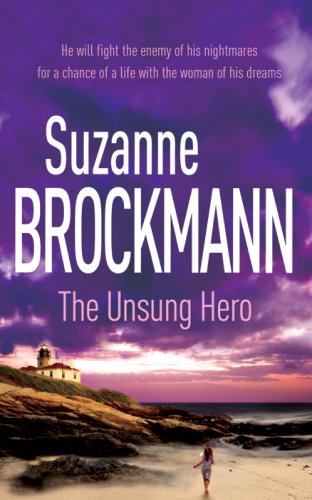
You can read Suzanne Brockmann’s moving and inspirational speech here. You won’t be sorry. And while you’re at it, pick up the first of her Troubleshooter series, The Unsung Hero. It’s so good.

Thursday, January 25, 2018

Men, Women and Herveys!

I’ve been obsessed recently with the fate of minorities in eighteenth century Britain. Mostly gays, because I’ve been writing and promoting Sinless. I discovered so much. It wasn’t a happy fate, unless you were rich and powerful enough to ignore the rules. Even then, if you fell from power, the locusts would descend.
Pre 1969, sexuality was used to bribe, coerce and blackmail people. Even more after the strictures of the Victorians led to an intractible moral code that drove anyone not deemed as “normal” to the burgeoning underground. Not just “sodomites” but the promiscuous, people with unusual preferences, and the rebels.
It isn’t necessarily a threat to security, being gay (I know it’s an anachronistic term but so is “homosexual” – I had to take the plunge and use the terms they did at the time!), but being forced into hiding a secret causes a vulnerability. Molly houses welcomed all gays, but also transvestites who were not necessarily gay. However, for much of the eighteenth century men were unashamed peacocks. As we now know, they are not all the same, but they were considered so for a long time. The famous Chevalier d’Eon, who dressed in women’s clothes publicly, wasn’t definitely outed as male until after his death. He was a spy, a man who dressed in the clothes of both sexes, took part in duels and created a fuss wherever he went. He must have been remarkable.
Closer to the 1750s, when Sinless is set, was the even more remarkable John Augustus Harvey. He had a wife who adored him, and with whom he had a large family – eight children. He was a politician at the highest level. John Hervey was a baron, but never inherited his father’s title of Earl of Bristol, as he predeceased his father. He was one of twenty children. Oh yes, twenty. He was an ally of the Prince of Wales, but after falling out with him over a woman, switches sides to Walpole. He was Lord Privy Seal, and a member of the Privy Council. However he also had a male lover, Stephen, to whom he was devoted. They had to share him. There was plenty to go around. All this was conducted at the highest level of society. Hervey also had a pernickety diet, in an age of gluttony, he dressed flamboyantly, made no attempt to conceal his preferences. He was probably the lover of Princess Caroline, the daughter of George II, who was said to have mourned him for the rest of his life.
A literary squabble arose with Alexander Pope, who was jealous of Hervey’s friendship of Lady Mary Montagu, who once declared that there were three sexes – men, women and Herveys.
I have his biography, and one thing that puzzled me was, where did he find the time? He had eight children, a male lover, and at least one other female lover, he was a hard working and intelligent politician, he was an important figure in the literary world. Honestly, if I’d written a book about a character based on Hervey, nobody would have believed me!
So I wrote about Darius instead. I do love him, the man with an essential humanity, who cared deeply about his family and the person he falls in love with. If he was cut open, Darius would have “iintegrity” written all the way through him. I am very fortunate that my publisher let me write his story, in the middle of a series about purely heterosexual relationships. I wrote him as a foil to his twin Valentinian, but he gained his own fans, including me, as we all got to know him better. Would I have loved John Hervey as much? I doubt it.

 Lord Darius Shaw has never been in love before. But when he renews his acquaintance with lawyer Andrew Graham in a raid on a molly house, where men meet men for forbidden pleasure, they discover mutual feelings as deep as they are dangerous. For while society will turn a blind eye to an aristocrat’s transgressions, Andrew has far more at stake. The son of city merchants, Andrew has a disastrous marriage in his past, and a young daughter to support. He could lose his livelihood, his reputation and even his life—and drag Darius down with him.

Darius and Andrew’s only choice is to deny the true nature of their relationship. But when an enemy Italian spy threatens their secret—and their futures—the two set out to catch him. And in the process they are forced to face their desires—and make a life-changing decision.


Buy Sinless Here:
Publisher; Kensington Books  :  Amazon USA  :  Amazon UK  :  iTunes  :  Kobo  :  Barnes and Noble Nook