Showing posts with label Christmas. Show all posts

Sunday, December 10, 2017

Christmas, Advertising and.... Biggles!


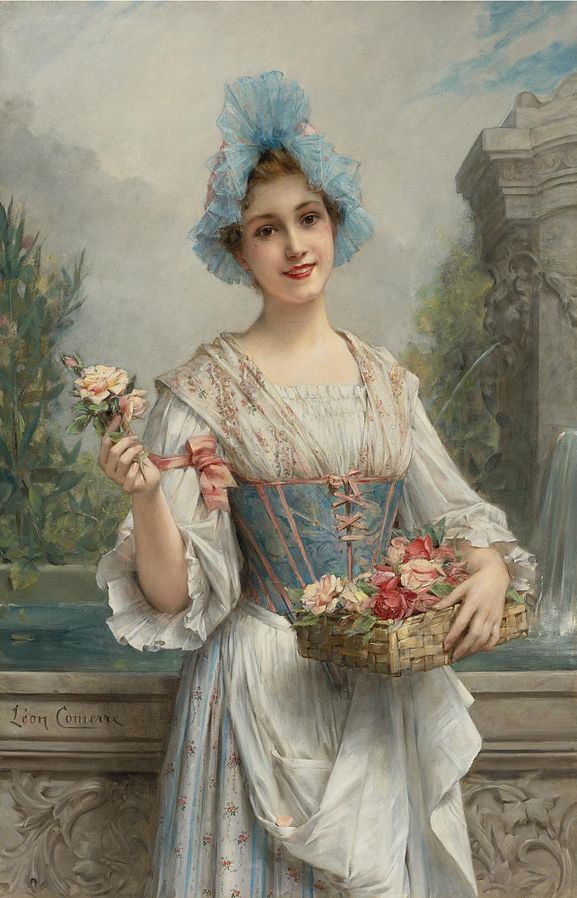
Léon-François Comerre - The Flower Seller
CHRISTMAS is a time when we are besieged with advertisements. Things to buy, things to eat, programmes to watch.  This week I have been thinking about advertising, how we market our wares, and how that has changed over the centuries.


Shopkeepers have always used signs outside their premises to attract custom, as can be seen in this print by Hogarth (below). At one time, signs hanging over the streets were banned, because of the danger of them falling down and causing injury.

And those with trades to sell might also place ad advertisement in a newspaper, like this lovely, short piece in the London Evening Post in 1746. It appears Mr Grainger promise to teach pupils to "write well in a Month"(many of us would be pleased to have such guarantees in education today!).


The advent of moving pictures early last century was an exciting development in entertainment, and it wasn't long before advertisers recognised the potential. Who doesn't remember sitting through "Pearl & Dean" while waiting for the big picture to start?


Television gave advertisers the opportunity to bring their products right into the home, and boy, did it become an art form! For a while (until modern technology made it possible to fast-forward through the breaks) adverts were in danger of taking over from the main event- indeed, some were much better than the programmes they interrupted (although possibly not the one shown here).


Books have never been subject to quite such a hard sell. After all, as readers we like to take our time and browse, don't we? But authors  want to get the message out there, so they have to advertise, too, and we do. Via our publishers, or personally, via social media.  But it's not new.
This came home to me earlier this week, when I was trying(unsuccessfully) to reduce the number of books on my overcrowded shelves.  As a girl I fell in love with Capt W E Johns' flying ace, Biggles, and my collection of Biggles books has remained with me ever since. For years I spent my hard-earned pocket money on Biggles books, reprints like this...

....or second hand copies, purchased room an Aladdin's cave of a bookshop on the historic Christmas Steps in Bristol.  It was in one of these old books, a 1950s edition of "Biggles Works it Out", that I found a note from Capt Johns himself.   It had been fitted into the front of the book, whether by the publisher or by the book's original owner I do not know, but here is the note .


Perhaps it is because I am now an author myself, and battling constantly with demands of modern media, but this really struck a chord with me. It makes that personal, direct appeal to the reader, just as we are urged to do today.
This book, along with its message, is going to remain on my shelves for a long time to come.
Merry Christmas, everyone, and happy reading.

 
Melinda Hammond

You can read my homage to the WWII flying aces in my short story, myBook.to/AndtheStarsShineDown


Or, if you want a little Christmas treat, you might like The Duke's Christmas Bride. myBook.to/DukesChristmasBride


Thursday, December 03, 2015

Winter Inheritance - Melinda Hammond sets the scene for a book that is close to her heart (and her home)


The English weather can be so drear at this season it is no wonder everyone wants something to look forward to. Something like Christmas.  However, very often the snowy weather we like to see on our Christmas cards doesn't appear until the spring and this year  the weather so far has been mild, windy and very wet, so I thought I would cheer things up with a little winter magic and some photos I took back in January.


I was reminded of this winter wonderland when I was checking over the proofs of Winter Inheritance, my contribution to the Christmas edition of Regency Quintet, a compilation of stories by myself, Fenella Miller, Elizabeth Bailey Amanda Grange and Monica Fairview.

Winter Inheritance was originally published as The Highclough Lady by Robert Hale Ltd as a hardback, but I have revised it and retitled it for a new readership. Winter Inheritance is set on the Pennines, inspired very much by the area where I live


Living on a hill we have often been snowed in, and on more than one occasion I have had to make the last part of the journey to my home on foot, just as Verity does, so the description of her first approach to Highclough is drawn from my own experiences (although mostly without a handsome hero to help me on my way!)


Here's  a short extract to go with the pictures..... 

Just to set the scene - Rafe Bannerman seeks out governess Verity Shore to inform her she has inherited a property in Yorkshire and he carries her off to her new home. But it is November, and the weather is turning very cold:-


Their stop at Manchester was shortened by reports of bad weather ahead of them and after a hasty lunch they set off again with the coachman casting an anxious glance at the grey clouds gathering overhead. By the time they reached Rochdale the sun had disappeared behind a blanket of grey cloud that had settled over the sky and rested heavily on the surrounding hills. Verity regarded the darkening landscape with foreboding: perhaps it was the grey cloud, but the land looked so much gloomier, even the walls were darker than the whitish-grey stone she had known in Derbyshire. She watched from the shelter of the carriage while Mr Bannerman conferred with the coachman and as he climbed in beside her she gave him an anxious, questioning glance.

'We will press on.' Rafe Bannerman answered her unspoken question. 'There are no reports of snow ahead yet, but I have decided we should take the upland road rather than the valley route through Derringden. The road is steep and a little rough, but it will save us at least two hours' driving. Do not worry, Miss Shore. You must not let the prospect of a little snow daunt you. Besides, it may not come until morning.'

Verity pulled her cloak about her and glanced up at the lowering sky.

'I hope you are right sir.'

As they travelled north the weather grew steadily colder and the first flakes of snow began to fall. Verity watched with growing unease as the road wound its way through a steep-sided valley and the light faded to a gloomy dusk. Soon the coach pulled off the toll road and began a steady climb.

'We are on the direct road to Highclough.' Rafe Bannerman's voice cut through the darkness. 'There is little more than a mile to go now.'

As they left the shelter of the valley the wind began to buffet the carriage, and the snow became finer, until it was hard, icy particles that rattled against the sides of the coach with each new gust of wind. Verity huddled into her cloak, listening to the storm. She tried to peer out of the window, but could see nothing in the near darkness. The road grew steeper and the coach groaned on its back springs as the horses struggled to drag it upwards. To Verity the journey seemed interminable. She had no idea how fast they were travelling but just as she had decided that they must be climbing a mountain rather than a hill, the carriage came to a halt.

'Wait here.' Rafe Bannerman jumped down, slamming the door behind him to keep out the storm. Verity sat alone in the darkness. She could just make out the sound of voices raised against the wind, then the door jerked open and she was obliged to hold her cloak tightly against the sudden icy blast. Mr Bannerman leaned in.

'John Driver says the horses can get the coach no further. The house is less than half a mile from here. Do you think you can walk?'

'Of course.'

'Let me see your shoes.'

She pulled one foot from the snug sheepskin and put it forward for inspection, wrinkling her nose at the well-worn leather.

'One of the advantages of a life of a governess,' she said, a laugh in her voice, 'One's footwear is always serviceable!'


Mr Bannerman helped her out of the carriage, one hand clasping the brim of his hat as he shouted over his shoulder to the coachman.

'Leave it here, no-one is likely to be coming this way tonight. Get the horses to Highclough, then have some of the lads come back with the sledge for the baggage.' He turned to Verity. 'Are you ready?'

'Yes.'

She looked down at her feet: the snow was so fine there was very little on the ground, but it was building up at the sides of the road, and she could feel the icy surface beneath her boots. They set off along a rough lane. The light was nearly gone, but she could just make out the high dry-stone walls on each side. The wind swirled about, tugging at Verity's thick cloak. The lane carried on upwards, and as they crested the highest point they were suddenly exposed to the full force of the wind, and Verity gasped as the icy rain hit her cheeks like dozens of tiny blades. She gripped her hood, pulling it tightly around her face and trudged on, her head bent into the wind. The storm howled about her and she found her feet slipping on the uneven surface. Unable to look forward, she kept her eyes on the ground, just visible in the fading light, gritting her teeth against the biting cold and the icy wind that cut through the thin kid gloves, stinging her fingers.

'Here, let me help you.' She felt a strong arm about her shoulders. 'Keep your head down. I'll guide you.'

She found herself clamped firmly against Rafe Bannerman's solid figure and he marched her steadily forward. A few minutes later, the wind dropped and Verity peeped up to see that they had turned onto a sweeping drive and had reached the shelter of a building. She was aware of a large oak door being flung open and she was bundled across the threshold into an echoing stone passage. Breathing heavily, she swayed as she found herself free of the gentleman's reassuring grip. She blinked, dazed by the quiet calm of the entrance hall.

'You are safe now, Miss Shore.' Rafe Bannerman murmured, taking her hand to support her.


***

The pictures included here will give you some idea of Verity's new home, although extensive tree-planting had made the area much less bleak now. But I can imagine her getting up one morning and seeing a winter moon, just like this one, rising over the hills.


It's the sort of book to enjoy  curled up before a roaring fire!


Happy Reading.


Melinda Hammond/Sarah Mallory


Regency Quintet, Christmas Edition, is out now on Kindle


Saturday, December 13, 2014

A Regency Saturnalia


When we think of the things we take for granted at Christmas, most of them turn out to be Victorian developments, not Regency.
The Christmas tree, elaborate presents, the Christmas pudding, Christmas cake, even the very special time of year, they were all invented or developed by the Victorians to help in their resurrection of family values.
When William IV died in 1837, the monarchy was at a low ebb. William was the last of the “wicked uncles” and his death draws a line under the era of debauchery and frivolity, and the feverish atmosphere of war that marked the early nineteenth century, particularly the Regency era.
Christmas was just one of many celebrations. The big one as far as the Church was concerned, was Easter, when Jesus was crucified and rose from the dead. Christmas was fairly arbitrary in any case, chosen by the early Catholic church to conveniently cover the period when the pagans went nuts at the winter solstice.
The remnants of the solstice are still there. After all, what does the Christmas tree have to do with the Christian story? Precious little. Then there’s the Christingle orange, one that does have religious significance, but has been dragged kicking and screaming into the church.
Our Christmas is a cunning mix of religion and happy party times. It is supposed to bring families together, but in the Regency era, it was a much quieter celebration, marked by churchgoing.
It overlaps with the Twelve Days, the Roman Saturnalia, when everything was turned upside down, when masters became servants and vice versa.
Many of our Regency ancestors did celebrate that one. A party where the masters served the servants and the servants gave the orders, often held at Twelfth Night. But any servant who wanted to keep his or her place would take care not to make the party too realistic! I can see it being embarrassing for some. Maybe the maid didn’t want to order her mistress to fetch her some figgy cake!
Saturnalia originally had a religious theme. The Romans liked that one, and they held it between the 17th and 23rd December. It was supposed to recreate and celebrate the golden age of the gods, when everything was perfect.
It would appeal to the flip side of the Regency zeitgeist—order overturned, the unthinkable happening. The kind of society that produced the Hellfire Club would celebrate it with relish.
It died out in the more staid Victorian era, when Christmas completed its transition from a wild, half-pagan celebration, to a religious celebration of family.
Which do you prefer?

Sunday, December 07, 2014

Christmas Through Historical Objects

Recently there has been something of a craze for telling the story of certain things through material objects – the BBC series “A History of the World in 100 Objects” was a fascinating example. It got me thinking about the different object associated with Christmas through time. Here are a few I came up with:

The Yule Log

The burning of the Yule Log was said to have its origins in pre-Christian paganism and the celebration of a winter fire festival. Intriguingly it has been suggested that this Christmas tradition only started in England in the 17th century and was an import from Europe. The first reference to it was made by Robert Herrick in the 1620s when he referred to “the Christmas log,” which was a good luck charm promising prosperity and protection from evil. The tradition died out in the late 19th century because of a decline in open fires. However, it could be construed to be continued in the Buche de Noel cake on the Christmas dinner table!


The Georgian table decoration

I’m cheating here a little bit because I don’t have an original Georgian Christmas decoration to show. This is a recreation from Fairfax House in York. Fairfax House is one of the finest Georgian town houses in England and every year they hold an exhibition called the Keeping of Christmas which displays elegant decorations, extravagant dining table decorations, sugar temples and Christmas greenery. There are lots of historical Christmas decorations on show at National Trust houses around the country. I'm planning a visit to Avebury Manor and also to Lydiard Park, where they are creating a Downton-Abbey style Edwardian Christmas.

The First Christmas Card

Henry Cole, first director of the Victoria & Albert Museum and the
organiser of the Great Exhibition, sent the world’s first Christmas card in 1843. However the traditions did not catch on in a widespread commercial way until later in the 19th century. Many of the first Christmas cards were postcards.

The Christmas Ball gown

I could not resist this gorgeous retro-looking Christmas ball gown that is now in the Chicago Museum. I would so love to wear that to a ball! It actually dates from the 1960s but looks like something from the 19th century. Never mind decorating the house, decorating yourself for the season takes the whole celebration to a new level!


What object or tradition best sums up Christmas for you? The tree, the exchange of gifts, Christmas carols, or something else?

Saturday, November 22, 2014

Choc Lit Christmases


Christmas has been celebrated in many different ways through the ages and today some of my fellow Choc Lit* authors are here with me to tell you a little bit about Christmas during the particular periods we write about.  As you will see, they are very diverse!

First, there’s Kirsty Ferry, who had this to say about her era:-

Part of my debut novel, SomeVeil Did Fall, is set in 1865. At that time in Britain, the Christmas Tree was still the preserve of the wealthy and the nobility, the custom having been introduced from Germany about twenty years earlier by Prince Albert, Queen Victoria’s consort. The Carrick family, who inhabit the world of 1865 in Some Veil Did Fall, would most definitely have had a tree; decorated, perhaps with candles and sugar ornaments and evergreen garlands– Lydia Carrick was always one for trying anything new, hence the fact that she bought an expensive camera from America and ended up taking a very important photograph. And, I also think, for many children in 1865, one of their most treasured Christmas gifts would have been a First Edition of the incredible Lewis Carroll’s Alice In Wonderland - first published in July 1865 and still a much-loved book and Christmas gift today.

Staying in Victorian times, but moving across the ocean to the US, here is Liz Harris’s account of a Christmas in Wyoming in the 1800s, as it would have been celebrated by the characters in her novel ABargain Struck  and her novella A Western Heart:-

In the mid 1800s, folk in the American West - pioneers, cowboys, homesteaders - celebrated Christmas very differently from those in the civilised East. For them, a homemade Christmas was the order of the day.  Picture a wooden cabin surrounded by deep snow. Welcoming holly and berries hang from the front door. There’s heat from the potbelly stove and the spicy aroma of foods cooked on Christmas Eve - cinnamon rolls, sweet pastries, and dark breads such as rye. The room is a mass of colour-rich natural materials: evergreens, pine cones, holly, nuts and berries. The tree in the corner is decorated with ribbons and berries, and homemade decorations made by the women, such as dolls made of straw or yarn, cookie dough ornaments and gingerbread men.

Food items will have been set aside months ago and most of the dishes made in the weeks before, such as the dense fruit cake lavishly infused with alcohol, and the traditional Yule log, both decorated with the help of the whole family. Only the vegetables and main dish are left to be cooked on Christmas Day itself, and it might be the traditional beef roast or a turkey or goose, stuffed with onions, sage, day old bread, dried fruit, venison or sausage.

The family sings carols around the tree. As soon as the children have gone to bed, the gifts are put underneath – corn husk dolls and some sachets of seeds – and candies, small gifts, such as a new tin cup, cookies and fruit, are put into the stockings hung up by the children. They’ll be but a few of the homemade gifts exchanged the following day, such as carved wooden toys, pillows, footstools, embroidered hankies, knitted scarves, hats, mittens and socks.

Sounds lovely! Back in England, Linda Mitchelmore tells us how Emma Le Goff, the heroine of her novels – To Turn Full Circle and There’sNo Turning Back – would celebrate Christmas in 1909:-

Christmas morning, 1909. I don’t think I’m ever going to forget it – my first as an orphan. I know I have a roof over my head – Nase Head House where I’m a servant;  nurse maid to Mr Smythe’s motherless children – and I’m grateful for it. But Christmas is for families and I haven’t got one any more.

Last night, at the staff supper, Mr Smythe surprised us all by getting cook to make a beef stew with red wine in it, instead of the usual Friday night cold cuts and boiled potatoes. Afterwards, he served us mince pies and a glass of port. While we were eating he put up a Christmas tree in the foyer, decorated with glass baubles and candles in little metal holders that don’t stand up properly. It looks lovely. 

I should get up in a minute. It’s six o’ clock already. But when I open my eyes I know there aren’t going to be any presents in the stocking I’ve hung from the mantelpiece over the fire. But there’s always hope. There aren’t going to be French pancakes – crêpes – my Breton Papa always made for Christmas morning breakfast either. Larger and thinner than English ones, Mama always saved a jar of her wild strawberry jam to put in the middle of each one. I can taste it now. And the fish baked in a pastry crust we always had for Christmas lunch, because Papa was a fisherman and he said fish was the food of the gods. And the tarte tatin Mama made with the last of the apples from the garden – I can taste that. 

This Christmas Day is already like no other I’ve ever experienced. But I carry my family traditions with me in my heart. And one day, I’ll have a home and a family of my own again, and I can take those traditions out and dust them off and Mama, Papa, and Johnnie will live again. They will … they will …

Intriguing!  Moving forward to a time of great hardship, here is Amanda James’s depiction of Christmas for the heroine of her novels Cross Stitch and A Stitch in Time:-

Sarah Yates/Needler goes back to many different time periods in her travels. I have selected just one of them to explain what would have happened at Christmas.

Sheffield, UK, 1940:  Christmas coming just ten days after one of the worst bombing raids of the Second World War would have been greeted with mixed emotions. People would have lost family members in the Blitz as well as homes and possessions.  My mother, at the time thirteen, remembers that there were only one or two presents on the day, but that she was very grateful to have a roof over her head and both parents to look after her. Many of their friends and neighbours were not so lucky.

Homeless people were given Christmas lunch in public centres and some even went back to their bombed out homes to eat Christmas dinner in the Anderson shelters. This was both a need to feel some sense of normality and as an act of defiance. Some people abandoned Christmas completely as it didn’t feel appropriate to celebrate under such tragic circumstances, others – for the same reasons as the people who ate in Anderson shelters – pulled crackers and decorated their homes as usual. 

It probably is inconceivable to most of us nowadays that people could survive all that and still carry on. There was no counselling for those who had seen terrible things or had lost loved ones – they were just supposed to get on with it. A very sobering thought.

Finally, I’m going back in time again to the year 1731, when my own hero and heroine in TradeWinds (the first book in my Kinross trilogy) are forced to spend Christmas in a cold Swedish manor house, deep in the forests of that country.

As they are snowed in, Jess and Killian can’t go to church by sleigh, the way they normally would, but they make the effort to walk instead wearing fur coats and as many clothes as they possibly can.  The snow is waist high in places and looks beautiful in the pale winter sunlight.  There was no such thing as a Christmas tree, but lots of home-made candles and branches of fir tree to stamp your feet on when you came through the front door (which would then give off a wonderful scent).  Christmas, or Yule, as they call it, is a time of sharing so what little food there is would be given to everyone, the servants as well as any poor people nearby.  The cook had been preparing special dishes for weeks – sausages, pickled herring, bread, cheese and much more – simple fare, but tasty and warming (something you appreciate when it’s up to minus 20 degrees outside and the windows of the house have frost on the inside!).  To further warm you up, the traditional snaps – almost pure alcohol and very strong – would be imbibed.  It had the added bonus of helping to break up all the fat contained in some of the rich dishes cooked with cream and butter.

Jess and Killian don’t give each other gifts, again because they are snowed in and have no access to any shops or materials for making anything.  People would traditionally give each other something though and each gift was usually accompanied by a rhyme to help the recipient guess what was inside.

I hope you have enjoyed reading about these different traditions – the Choc Lit authors and I wish you a very Happy Christmas!


*Choc Lit is an award-winning independent UK publisher specialising in women’s fiction where the heroes are like chocolate - irresistible!