Showing posts with label National Portrait Gallery. Show all posts

Thursday, November 05, 2015

Byron in Albania

In 1809, Lord Byron arrived in Albania. As I've just visited Albania myself - where I kept coming across him - I thought you might enjoy a post about Byron's time there.


Lord Byron in Albanian costume by Thomas Phillips, 1814.

Albania, at the time of Byron’s visit, was part of an ailing Ottoman Empire. In theory, Albania was ruled by the Sultan; in practice, much of it was ruled by a ferocious and able brigand leader who later became known to history as Ali Pasha (1740-1822). The Sultan, forced to recognise Ali’s diplomatic and administrative abilities, as well as his military prowess, persuaded him to abandon brigandage and serve the Ottoman Empire instead. Ali did so to great effect and was rewarded in 1787 by being appointed Pasha. In theory, he was under the Sultan but, in practice, he extended his Albanian territory considerably to include much of northern Greece and ruled it more or less as an independent territory.    


Ali Pasha reclining in a boat

Ali developed his own independent relations with Europe, initially with Napoleon, but his main interest was the extension of his own power, in particular, establishing a strong Mediterranean sea presence. When he discovered, in 1807, that Napoleon was discussing plans with the Tsar to dismantle the Ottoman Empire, Ali switched sides and made overtures to the British.

In 1809, Byron left England for the continent on what he called a ‘pilgrimage’. In effect, it was a Grand Tour, taking in Portugal, Spain, Sardinia, Sicily, Malta and Greece, and it seems to have involved a lot of drinking, sex and scenery. In September, he arrived in Albania and headed straight for the court of Ali Pasha in Tepelene. He was twenty-one and Ali Pasha was sixty-nine.


View over the River Vjosa

Bryon was impressed by the scenery. In a letter to his mother, he called it: ‘a country of the most picturesque beauty’. His travels inspired Childe Harold’s Pilgrimage, the narrative poem which made his name as a poet, where his hero visits various countries and has adventures.

Here, Childe Harold describes the mountains in Albania:

Here roams the wolf, the eagle whets his beak,
Birds, beasts of prey, and wilder men appear,
And gathering storms convulse the closing year.

Wolves, bears and eagles are still found in the mountains.

Byron was even more impressed by the Pasha’s court. He wrote: ‘The Albanians in their dresses (the most magnificent in the world, consisting of a long white kilt, gold-worked cloak, crimson-velvet gold-laced jacket and waistcoat, silver-mounted pistols and daggers,) the Tartars with their high caps, the Turks in their vast pelisses and turbans, the soldiers and black slaves with the horses,…. The kettle-drums beating, boys calling the hour from the minaret of the mosque… formed a new and delightful spectacle to a stranger.’

He acquired an Albanian costume and wore it for his 1814 portrait by Thomas Phillips (see above), now in the National Portrait Gallery. And one must admit that he looks spectacular in it.


The Castle of Berat

Ali Pasha could not initially see Byron: he was besieging the castle of Berat. Perched on a precipitous crag, Berat is not a place to be besieged lightly, as you can see. 


View looking down from the castle of Berat.

When Ali Pasha returned, he received Byron with great honour in ‘a large room paved with marble; a fountain was playing in the centre; the apartment was surrounded by scarlet ottomans.’  Britain was now Ali’s ally and he may have viewed a visit by a British aristocrat as a compliment.  

Byron appreciated all that Ali Pasha did for him: offering him accommodation, servants, etc. and loading him with ‘almonds and sugared sherbet, fruit and sweetmeats.’  But he did not ignore his host’s other, darker side. As he wrote to his mother:

His highness is sixty years old, very fat and not tall, but with a fine face, light blue eyes and a white beard; his manner is very kind and at the same time he possesses that dignity which is universal among the Turks. He has the appearance of anything but his real character; for he is a remorseless tyrant, guilty of the most horrible cruelties, very brave, and so good a general that they call him the Mohametan Buonaparte.

Gjiokastra castle dominating the town.

At nearby Gjirokastra, another ancient castle substantially re-fortified by Ali Pasha in 1811, I came across Lord Byron again. There is a portrait of him in the castle but, alas, it is so dark with ancient varnish that it was impossible to photograph – but it is clear that Albania has not forgotten his visit.  

Ali Pasha spared no expense to make the castle impregnable as the huge vaulted rooms attest. It is built to withstand a siege with its huge water cistern, bread ovens, and bristling with weaponry.


Vaulted room, Gjirokastra Castle

Gjirokastra is a World Heritage site, not only for the castle but also for the unique series of late Ottoman houses that climb precipitously up the hillside. 


Ottoman house, Gjirokastra, built in 1811

We visited a typical wealthy Ottoman merchants’ house, built in 1811 by the Zekate family (who still live there). The reception room (men only) had a beautifully painted fireplace and elegantly carved wooden ceiling. There were divans skirting the room for guests, though not, alas, in scarlet. Women had their own quarters.


Fireplace in reception room.

Byron, in Childe Harold’s Pilgrimage has his hero come to the Pasha’s court and comments on women’s positon thus:

Here woman’s voice is never heard: apart
And scarce permitted, guarded, veiled, to move,
She yields to one her person and her heart,
Tamed to her cage, nor feels a wish to rove…

A view very convenient for men! Would the ladies of the harem have agreed, I wonder.

View from the castle of Gjirokastra

But Byron’s ‘pilgrimage’ was more than just an adventure and he wasn’t just a dilettante aristocrat traveller. He was honing his skills as a poet and working on Childe Harold’s Pilgrimage. (‘Childe’ is a young man of noble birth.) Harold is a young melancholy but defiant outcast with nameless sins in his past, traveling to distract himself. The first two cantos, which cover his Albanian travels, came out in 1812, and brilliantly depict the places, characters and events Byron saw. It also made his name as a poet. As Byron put it: ‘I awoke one morning and found myself famous.’  The rest is history.

Elizabeth Hawksley

Photo: Lord Byron by Thomas Phillips, courtesy of the National Portrait Gallery

Elizabeth travelled to Albania with Andante Travels: www.andantetravels.co.uk

Monday, March 23, 2015

Rubenesque


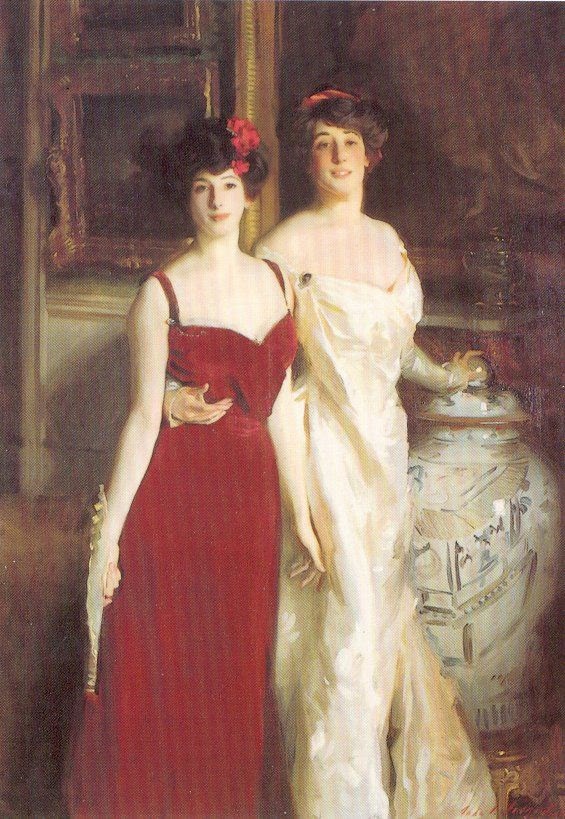
I think I’ve mentioned before that I love going to art exhibitions and London is of course the ideal place for that.  Each year the large galleries put on some lovely and varied shows and last week I was lucky enough to see two of them – Pieter Paul Rubens (“Rubens and his Legacy”) at the Royal Academy and John Singer Sargent (“Portraits of Artists andFriends”) at the National Portrait Gallery.

Picture courtesy of Wikimedia Commons
Rubens, a brilliant painter who lived between 1577 – 1640, was a master of portraiture and taught Anthony Van Dyck (my personal favourite, who I think actually surpassed his master).  He also excelled at landscapes, religious paintings and mythological depictions, using colour and sensuality in a way that many artists have tried to copy since.  Mostly though he is associated with the word “rubenesque”, ie he depicted naked women with lots of curves they were not ashamed to show off.  He apparently specialised in painting white skin, using techniques that made it look almost translucent.  The viewer can sometimes see the veins and it’s as though you feel the warmth of the soft flesh of these attractively plump ladies.  Very clever, although personally I preferred his formal portraits where the sitters were clothed (albeit still with a lot of bosom on show!).

However, it’s not the fact that he painted naked ladies, but the shape of the women that most people find fascinating as it’s so different to the current ideals and fashions.  This was a time when plump, rounded shoulders and breasts were the preference and with the rest of their bodies covered up, everything else must have seemed irrelevant.  No obsessions with "abs" here, no worries about cellulite.  That sounds rather liberating, but no doubt the ladies back then had other concerns – were they round enough, were their eyes the right shape and size, their mouths small and perfect, their hair curly and luxurious ...?  Every age has its own restrictions and we are ever slaves to fashion.

Picture courtesy of Wikimedia Commons
John Singer Sargent’s paintings couldn’t have been more different, although there are definitely similarities as well.  He lived between 1856 – 1925 and in his compositions are found cool, elegant Victorian, Edwardian and early 20th century ladies, still covered up by long dresses, but with a much slimmer silhouette and painfully small waists.  There are still creamy, bare shoulders and arms, but not as round.  The preferred skin tone is translucent white, as before, the busts on display often impressive.  To me though, these ladies have more character somehow, staring defiantly at the viewer.  No large limpid eyes here, more the knowing looks of someone who knows she is attractive.  Or is that just my perception, because they are closer to our own ideals?  They certainly seemed a lot more vibrant, although that could be simply because Sargent was a genius.  (Some of his paintings look so real I expected the sitters to step out of their frames and talk to me any second).

When writing historical fiction it’s often difficult to depict a heroine who is of her time and yet appeals to a modern audience.  We can do it by getting into their mindset and not let them act contrary to the rules and customs of the time, even though we might add a bit more feistiness and wilfulness than would perhaps have been the norm.  And there’s always the tropes of “she was educated by her father because he didn’t have a son” or “she was allowed to sit in on her brother’s lessons with his tutor” to account for her being cleverer than the average lady at the time.  But what about their looks?

I have to admit that I’m in the middle of a story set during the English Civil War (ie. 1640s, so just after Rubens’ lifetime), but I don’t want my heroine to look like Rubens’ perfect woman.  Instead she’s slim, lithe and with the sort of curves we prefer now.  Is this wrong of me?  I don’t know, but I’m sure there must have been women of all shapes and sizes, then as now, and those who worked hard for a living (and life was hard for the majority of them) wouldn’t have had a chance to get plump.  That was for the idle aristocratic ladies whose idea of exercise was to take a slow amble round their magnificent gardens or perhaps play a game of bowls, not exactly taxing.  My heroine, on the other hand, is a lot more active, so I’m sticking with my original description of her.  Though perhaps I’ll add some more lustre to her skin and make her eyes bigger, mouth a perfect cupid’s bow … :-)

What do you think?

Christina x
http://christinacourtenay.com/
 

Monday, July 19, 2010

Cuture Shock


Just now I am researching for a book set entirely in India in the late 18thc and writing a trilogy which begins there in the early 19thc, so the British experience is very much on my mind. A visit to the fabulous recent exhibition at the National Portrait Gallery - The Indian Portrait - gave a fascinating insight into the life, and mind-set, of the earlier British inhabitants, the officers of the East India Company who seem to have thrown themselves whole-heartedly into princely Indian culture.

A portrait of William Fullerton (c1764) shows him reclining on a terrace smoking a huqqa, just like many of the Indian noblemen in the exhibition. Fullerton is wearing his wig and black tricorne hat, his crimson coat and knee breeeches - he must have been sweltering! - but a similar scene depicting John Wombwell in the late 18thc shows him wearing Indian dress and he seems very comfortable sitting cross-legged with his pillows and huqqa.

The picture at the top is from a collection of old prints of India showing the life of these East India Company officials. This one reclines at his ease in a completely European setting - furniture, globe, even his tall hat left on the table. And yet he is listening with drowsy pleasure to a quartet of local musicians.

These earlier Europeans seem to have adapted well to life in India - if they lived long enough. When they succumbed to disease or the heat they even adapted the funery monuments of home to their new life, as this graceful figure on a tomb in St John's Chuch, Kolkata shows. Many took Indian wives, some converted to Islam or Hinduism without causing adverse comment, most seem to have adopted Indian dress for much of the time.

The culture shock must have been extreme but the approach appears to have been one of curiosity and interest as they settled down to trade, sending back the silks and embroideries, the Kashmir shawls, the ivory and gems that adorned the ladies of Georgian Society back home. What did they make of scenes such as this of the Red Fort in Delhi in a cloud of Black Kite?

You cannot romanticise their presence, of course. The British East India Company were in India to make money - and they did, in staggering quantities, while enjoying all the privileges of the princely rulers and without, it seems, a thought for the ordinary people. But I cannot help liking them far more than the Victorians who followed them and condemned their adoption of local ways and shunned the wives and children of their marriages.

I'll leave you with this image of Empire - Queen Victoria dominating the scene in front of the Victoria Memorial in Kolkata.


Louise Allen