Showing posts with label historical Wednesday. Show all posts

Wednesday, August 12, 2015

What Makes a Gentleman? - A historical post

Class has always been a hot topic in English society and I’m wondering a little at my audacity – or even foolishness – in dipping a toe in the waters of it here. When did the “gentry” first emerge as a social class? Was belonging to the gentry synonymous with being a “gentleman”? What did the term mean in the Georgian and Regency period and what makes a gentleman these days? These are big questions but perhaps we can look at a few elements of them.

In 1583 Sir Thomas Smith wrote: “One who can live idly and without manual labour and will bear the port (deportment) and countenance of a gentleman, he shall be taken for a gentleman.” The luxury goods and extravagant clothing of late 16th and 17th century London were an avenue to social mobility. Sumptuary legislation - the laws that governed the types of clothes that the different social classes were entitled to wear - had lapsed and a consumer revolution was taking over. Eighty years after Smith was writing, the diarist John Evelyn complained: “How many times have I saluted the fine man for the master, and stood with my hat off to the gay feather, when I found the bird to be all this while but a daw.” In other words, in the 17th century smart clothes and an appearance of wealth made the gentleman. Or perhaps gave the appearance of a gentleman.

Sir William Craven was one such man who made good at the turn of the 17th century. He was the son
of an agricultural worker from Yorkshire who was apprenticed into the cloth trade in London. He worked hard, built up his business, married well, acted as moneylender to the court of Elizabeth I, bought himself a knighthood from James I, and was Lord Mayor of London. By the time of his death he had amassed a fortune of billions in today’s terms and had moved firmly from the lower labouring classes to the upper echelons of the Middle Class. His sons were both given titles and moved into the aristocracy. Phenomenal social mobility and all through the acquisition of a fortune! But did this make them gentlemen or is the definition of such a term more nebulous?

The original dictionary definition of the word gentleman was strict: A well-educated man of good family. It was also used to refer to a man whose income derived from property as opposed to a man who worked for a living. It was only in the eighteenth century that it came also to mean a man who was cultured, courteous and well-educated with a code of honour and high standards of proper behaviour.

By the time of Jane Austen, the gentleman had come to be defined by his personal qualities as much as by his status as a member of the landed gentry. He was not a member of the nobility but was an “esquire” at the top of the pile of untitled landowners. (Knights and baronets also do not belong to the peerage but are still a cut above an esquire by virtue of holding a title, and of course Jane Austen emphasises beautifully the superiority of Sir Walter Eliott, for example, a baronet, over Lady Russell the widow of a mere knight!) Even so, a gentleman such as Mr Darcy, untitled but well-connected, with a beautiful house and a very good income, was not to be sneezed at.

Further down the social scale was the “lesser gentry” constituting those in the military, attornies, doctors, clerics; the professional elite. Of course some of these, especially in the military and the church, might be younger sons of the nobility, just to confuse the issue. But these professions also offered opportunities for fortune and social advancement. The wealthiest of merchants and manufacturers were at the bottom of this “gentry pile”. As a group the gentry described themselves as genteel, polite and civil. They did not pretend to be members of “the Quality” although a connection to the Ton was highly prized (illustrated again by Sir Walter and his kow-towing to Lady Dalrymple!) There was in fact a profound cultural gulf separating the lesser gentry from the landed aristocracy.

It is the gentleman of the Georgian period who is the precursor to the gentleman of the Victorian period in that he establishes a code of conduct based on the three Rs: Restraint, Refinement and Religion. During the reign of George III, the British begin, by their reserve and emotional control, to distinguish themselves from the peoples of southern Europe whom they considered to have a more hot-headed temperament. This is where the move to define the gentleman by his manners rather than his birth or fortune begins.

By 1897 when Mrs Humphrey published her book “Manners for Men” the concept of the gentleman
was still being hotly debated. She wrote: “ Gentleness and moral strength combined must be the salient characteristics of the gentleman, together with that polish that is acquired… through the influence of education and refinement. He must be thoughtful for others, kind to women and children and all helpless things… but never foolishly weak. There are few such men but they do exist. Reliable as rocks, judicious in every action, dependable… full of mercy and kindness.” A total paragon, in fact! Her comments on the “ill-bred young man,” the reverse of the gentleman, are very funny. He is unkempt in his personal appearance, is so untidy that he creates extra work for the maids, late for meals, irritable and rude. Those who use strong language in front of ladies are held up for particular criticism.

Mrs Humphrey then issues some extremely helpful instructions to those aspiring to be a gentleman. It is important for a gentleman to walk on the outside of a lady on the pavement so that he gets splashed by the traffic (and the contents of chamber pots raining down) and she does not. I remember that my grandfather, another self-made gentleman, was a stickler for this although the habit has somewhat died out now along with a close encounter with chamber pots, fortunately. The gentleman, of course, always offers his seat to a lady. Interestingly I noted that a lady should never ask for a seat; this is not ladylike. All Mrs Humphrey’s advice relates to manners and behaviour, the implication being that even a man without good birth or fortune can become a gentleman. In fact she notes that if he comes from a poor home and still turns out well that is even more laudable.

So in our modern age, do you think it is still important for a man to be a gentleman? What do you think are the qualities we look for in a gentleman? Are these different from the ones that we require in the heroes of our Regency fiction? Who is your favourite gentleman, real or fictional?

Nicola Cornick


Wednesday, August 05, 2015

Historical Costume: 19th Century Underwear Revealed


A few weeks ago I had the pleasure of watching historical costume expert, Mireille Weller, demonstrate what a Victorian lady in 1875 would have worn, from the shift up. As I watched her getting dressed, I realized that it was not that different from Regency times, so I thought a post on  19th century underwear might be interesting.  

The defeat of Napoleon at Waterloo signalled not just a change in the map of Europe, but also a change in fashion. After twenty-five years of war, people were desperate for something new. As the waist slowly descended to normal levels, the base of the skirt, held in place by a wadded hem, began to bell out. Stays had always been worn but now they became stiffened with whale bone and extra-tight lacing came in to emphasize the waist. By 1818, fashion dictated that a small bustle (known colloquially as a ‘bum-roll’) be tied as high up as possible under the back of the skirt to create the fashionable ‘Grecian bend’. In fact, according to The Handbook of English Costume in the 19th Century, a miniature version of this was in evidence even earlier before 1810.  

And, we must not forget that the formal dress of the 18th century, with huge hooped skirts for the ladies, was the correct court wear until 1820. Our heroines would have had to cope with hoops and corsets, if they were to be presented to the Queen. So how did they manage?


Stage 1: the shift and stockings

Mireille, our guide, appeared in her shift and stockings. Her shift was a loose cotton (linen in the Regency) garment with short sleeves and a scooped neckline which fell to just below the knee. It was ubiquitous throughout the 19th century, being cheap and easily washable. Her cotton stockings were held up by garters above the knee. Our Regency heroine’s stockings were held up by garters below the knee and, thus, occasionally visible.

This could lead to some embarrassment as the following poem from The Oracle of 1800 shows:

Why blush, dear girl, pray tell me why?
You need not, I can prove it;
For tho’ your garter met my eye
My thoughts were far above it.


Stage 2: the open-crotch drawers

Mireille then put on her open-crotch drawers, tying the strings at the back. Then she pulled the shift out so that only the legs of the drawers showed.


Stage 3: boots

So, what came next? The answer was unexpected. Boots. Mireille had learnt from experience that once she’d got her corset on, it was impossible to bend down enough to put on her boots, so they had to come first.


Stage 4: the corset. This was fastened at the front and tightened at the back.

Then came the hooped petticoat plus the bustle at the back to give the right silhouette. And our Regency heroine would have attached the bum roll at this point.


Stage 5: the crinoline and bustle

Next came the corset. This fastened at the front with wire hooks and eyelets but there was also lacing at the back which Mireille could tighten herself. She invited me to measure her waist before and after. Her waist was one and a half inches smaller after she’d tightened the laces and, doubtless, a determined maid could have lost another inch or so. 

Interestingly, tightly-laced stays were worn throughout the early Regency period. As The Ipswich Journal put it in 1807: ‘long stays are adapted to give the wearer the true Grecian form’. And in 1813, a garment described as an ‘Apollo’ was, according to The British Press, ‘a sort of under-dress or coat of mail worn by ladies to make their waists looks slender and genteel.’ It sounds excessively uncomfortable!


Stage 6: the first petticoat goes on over the head.

Next came the petticoats – two of them. She put them on over her head as she couldn’t bend enough to step into them. The second petticoat was more decorated than the first and they were both there to hide any evidence of the crinoline or bum roll ‘scaffolding’. In winter, a Victorian lady would have also worn a scarlet flannel petticoat for warmth. Since Medieval times, the colour scarlet was thought of as being, literally, warming; the early 17th century portrait of the Cholmondeley sisters in the Tate Britain gallery, each holding a baby swaddled in scarlet, is a good example. And we know that ‘The Princes of Wales wore a very large red shawl at the theatre’ in 1808. Presumably this, too, was for warmth.

Stage 7: the second, more decorated petticoat

Of course, having two or more petticoats, each one more elaborately decorated than the one underneath, allowed a lady to lift her skirt a fraction to display a froth of lace.


Stage 8: the skirt

Then came the skirt which also had to go on over the head – and you can see from the photograph how awkward it was to arrange properly. In reality, Mireille would probably have had a maid to help her. The skirt fastened at the back.

Stage 9: the decorative over skirt

After that, she put on the overskirt. This was purely decorative.


Stage 10: the bodice

Lastly, Mireille eased herself into her bodice and showed us the false curls which would enable her to put up her hair in a fashionable chignon with ringlets hanging down. The hair-style is not too dissimilar to the antique Roman style fashionable in 1812. Plus ça change…

You can see that with so many separate garments, even the simple act of sitting down could be a problem. This was why, Mireille explained, a gentleman pulled out a lady’s chair in the dining-room. His job was to give her the space to manoeuvre all her petticoats, crinoline and skirt into position so that she could sit down; and for that she needed both hands. The gentleman then gently pushed the chair forward so that she could sit safely – without, we hope, landing her on the floor.

It was a fascinating demonstration and Mireille’s explanations were equally interesting. All the same, I found myself thinking: thank goodness I live in the 21st century.

All photographs by Elizabeth Hawksley

Elizabeth Hawksley

Wednesday, July 29, 2015

The Georgian gentleman’s version of the Little Black Book - a historical Wednesday post

Welcome to another of our historical Wednesday posts. Today, Elizabeth Bailey takes a look into the underside of Georgian society with Harris's List.


Harris’s List was a fascinating little volume, started in 1757 by one Samuel Derrick, as a venture to get himself out of debtor’s prison. His lively descriptions of the ladies who made themselves available for a gentleman’s amours proved so popular that the book was revised annually until 1795.

“Harris” often explains how a lady “fell into the life”. Miss Char-ton of No. 12, Gress Street, “came of reputable parents…yet the address of a designing villain, too soon found means to ruin her; forsaken by her friends, pursued by shame and necessity; she had no other alternative...”

Miss Le-, of Berwick-Street, Soho, “was debauched by a young counsellor, from a boarding-school near town, where she was apprentice.”

The majority of ladies featured in this entertaining directory for the pleasure-seeking young buck, which abounds in witty euphemisms, were in their teens or early twenties. For example, there is Miss Townsend, 19: “the use of the needle first fired this lady’s imagination with the use of a certain pin”.


Strong liquor was the preferred anodyne apparently. Miss Godfrey, a commanding female, “will take brandy with any one, or drink and swear, and though but little, will fight a good battle.”

It’s rather tragic to find women’s attractions (or otherwise) delineated in detail:
“she is amorous to the greatest degree, and has courage enough not to be afraid of the largest and strongest man that ever drew weapon in the cause of love”.
“but a middling face, with large features, a coarse hand and arm, and in stature short and clumsy”, but she is “an excellent bedfellow”.
“of a middle size, black eyes, plump made and her skin good”
“fine blue eyes that are delicious”.
We are told about good teeth and “sweet breath”, in a day where these were rare.

We also find out what it may cost our young man about town to enjoy a particular lady’s charms. One or two guineas appears the norm, with here and there a more expensive luxury on offer.

The genteel Miss Le-, who was led into sin, is only seventeen and “has a piece of the termagant about her”, but she commands three or four guineas for her services, which include birching for those so inclined. While Miss - of Wardour Street, who is “but newly arrived” and “darts such irresistible glances as can scarcely fail to engage the hearts of the beholders” will not accept less than five guineas. Mrs Ho-fey, on the other hand, who “calls forth all her powers to give delight with uncommon success” will happily settle for half a guinea.

A guinea (one pound, one shilling) seems a pathetic sum to us, yet in today’s money is worth around £60. A lady’s maid was paid less than that in a year, and no doubt worked a lot harder. The downside was the future. There are very few females over thirty in Harris’s List. Assuming one could avoid a dose of “the pox” or any other disease and live, what to do when the charms of youth faded? How many of them were canny enough to salt away a quantity of takings as insurance?

A few, one assumes, if they had garnered sufficient fortune, might be lucky enough to marry. Others are mentioned as having moved into brothel-keeping themselves. But the rest?

What happened to Sally Robinson, who was given five shillings at the age of fifteen to cure her of the clap “which she got from her deflowerer”? On the town in 1761, what hope had “a tall, fat girl” of any kind of living thirty years later? Or Kitty Buckley, who was one of the few older females and already 35 in 1761? She was “reported to have ruined twenty keepers” because she was “as wicked as a devil, and as extravagant as Cleopatra”. Since she had been in the bailiff’s hands about three times a year, did she end her days in prison?

The life was pitiful, if there was nothing else, but there’s no denying Harris’s List is a riveting read and has a lot to tell us about the less glamorous side of life in the 18th century.


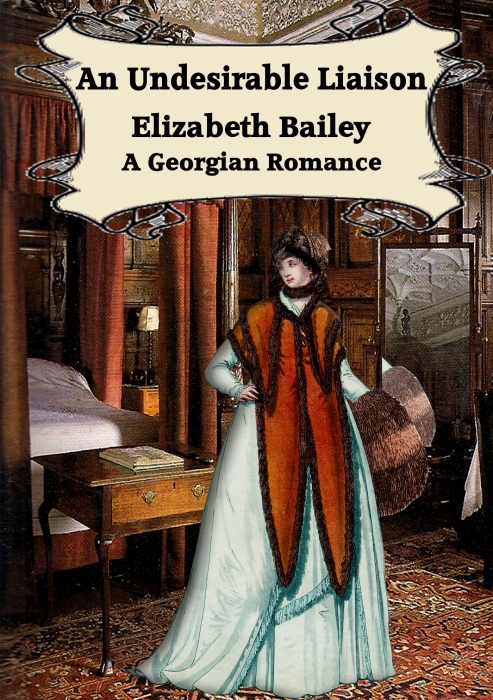
My heroine in An Undesirable Liaison narrowly escapes falling into the prostitution trap:

In the tradition of Regency Romance, scandals past and present unravel in the path of destiny. Caught by an overwhelming attraction to her new employer, Florence struggles against temptation. Can Jerome withstand Florence’s allure, when his desire can only mean her ruin?


Wednesday, July 22, 2015

Bath in its Heyday - Entertainments - a historical Wednesday post


 As Bath became a fashionable city in the eighteenth century, visitors were driven to its entertainments for a variety of reasons. Entry to Bath society was not governed by the strict rules observed in London, and so a diverse variety of classes met and mixed, merchants in trade or squires from the country were able to fraternise with aristocrats and those in the first fashion. Subscriptions were paid for the balls in the assembly rooms at Harrison’s and Lindsey’s, or there were opportunities to mingle at the Pump Rooms and Gardens.
For mothers like Jane Austen’s Mrs Bennet, their daughters could be introduced to a marriage market they might not enjoy elsewhere, though as Catherine Morland finds out when she first arrives in Bath it’s not much fun if you do not know anyone.
The master of ceremonies had the job of introducing likely people into society, and one of the most famous was Beau Nash. He published a code of manners to help those who might not know how they were expected to behave, and these were posted in all the public places of the assembly, and in the annual Bath Guide.
Here are a few examples of his rules:
Gentlemen of Fashion never appearing in a Morning before the Ladies in Gowns and Caps, shew Breeding and Respect.

Ladies dressing and behaving like Handmaids must not be surprised if they are treated as Handmaids.

That the elder ladies and children be contented with a second bench at the ball, as being past or not come to perfection.

Chandeliers-Upper Assembly Rooms
He thought nothing of remonstrating with anyone who did not obey him, even refusing Princess Amelia, George the second’s daughter an extra dance after the clock struck eleven. But she forgave him, presenting him with a silver tureen when she left Bath. The Duchess of Queensberry, who appeared at the rooms in an apron was told ‘such things are suitable for Abigails’, even though it was of the finest lace and worth £200.

Once arrived in Bath a formal call on the Master of Ceremonies was made and if you were important enough for him to wait on you, the call would be returned. At the height of the season you might be introduced at a ball, as in Catherine Morland’s case in Northanger Abbey.

Not everyone attended the baths. It was an early morning jaunt, the bather was taken by sedan chair to the King’s, Queen’s or Cross Bath. The Queen’s Bath was for ladies only, and most were there for the healing benefits, not the society. The Cross Bath was used by the quality, purely for enjoyment. In the ‘slips’ or dressing rooms they were dressed by an attendant into canvas drawers and waistcoat for the men, and a loose gown with capacious sleeves for the ladies. Guides led the bathers into the water hanging onto them to make sure they didn’t fall over. Ladies received a little floating dish, like a basin, into which they put a handkerchief, a snuff-box, and a nose-gay. Men and women could bathe together, and it seems some took advantage of the situation.

Here is perform’d all the Wanton Dalliance imaginable; Celebrated Beauties, Painting Breasts, and Curious Shapes, almost expos’d to Public View; Languishing Eyes, Darting Glances, Tempting Amorous Postures, attended by soft Musick, enough to provoke a Vestal to forbidden Pleasures … Here were also different Sexes, from Quality to Honourable Knights, Country Puts and City Madams.

After about an hour it was time to leave. Here is a contemporary description.

Neither sex can come out of the King’s Bath without being stripped quite naked by an old woma who takes off the wet, and put on dry Apparel, for our part, we think, being thus stripped by an old Hagg, alive is but little better than being served the same Sauce when dead in the Field of Battle.

After paying for this delight the bathers were wrapped in blankets and taken back by sedan chair to their lodgings. They were taken sweating to bed, and when cool, got dressed and went out for breakfast either in a coffee house or by crossing the river in a ferry to sit in a pavilion in Spring Gardens. If you’ve been to Bath, this was an area near to where the boat trips still go today.

The site of Molland's Confectioner's
The Pump Room was visited between eight and nine for the usual prescription of three glasses of spa water and to meet friends. It’s still possible to try the waters, they are slightly warm with a strong sulphurous taste - not my favourite! After that the ladies might return to their lodging houses or meet in a coffee house. Jane Austen makes mention of Molland’s in Milsom Street, which is now the shop, East. The gentlemen might visit one of the many circulating libraries and reading rooms.
At midday, people attended church, the Abbey being favourite, and then they were ready soon after for dinner at three o’clock. People might rest then until the evening when card-playing at private parties, theatre going, concerts, and dancing began. Both Assembly Rooms had card rooms which were always full. There were always activities going on in Bath to amuse its visitors, and Jane Austen used this as a background for her two novels, Northanger Abbey and Persuasion.

I’ve used Bath as a setting in one of my books, Searching for Captain Wentworth, and had a lot of fun researching every aspect of the city. It’s always a pleasure to go to Bath, and because of the architecture, and the fact that most of the places described above can still be visited, you can imagine yourself quite lost in time.

Searching for Captain Wentworth
Jane Odiwe


Wednesday, July 08, 2015

PUTTING ON MY TOP HAT… How a Regency fashion lingers on. A Historical Wednesday Post


"…his tall, curly-brimmed beaver hat and many-caped driving coat suggested a man of substance…" *


How many times have you read a similar line in a Regency novel?  We tend to think of it as a Regency innovation, but in fact the earlier 18th Century style of cocked hat (or tricorn, as it was called later) was often made of beaver fur, too, although different furs and even woolen felt could be used as a cheaper option.  It was the style that changed, rather than the fabric, and the Regency "beaver" was the forerunner of today's top hat, which is now more often made of silk.

Beaver felt was a popular material for hats in Europe from the 16th century through to the mid-19th century, but it was when the beautiful pelts from North America began to arrive in Europe that the fashion really caught on.


Beaver felt hats could be in black, fawn, grey or white and were generally tall, with widely varying   the most popular being the wider at the top. Silk hats (or polished beaver) came from Italy in the mid 18th century but did not become popular for our Regency hero until the 1820's and even then they were not general worn until the 1830s.
types of crown,


Being a hatter was a dangerous profession, because they used mercury in the felting process  and this affected the nervous system and caused mood swings, aggressive behaviour, the shakes and hallucinations. This may well be the origin of the term "mad as a hatter." It certainly sounds plausible to me.
The picture showed the various  types of  beaver hat worn around the time of the Regency, and the curly-brimmed one definitely shows  that the top hat was on its way, and in 1823 a Frenchman called Gibus is credited with inventing the collapsible top hat.
 
Melinda Hammond / Sarah Mallory

*quote from "A Lady at Midnight", Melinda Hammond  US  UK

 Sarah Mallory - 
The Chaperon's Seduction pub July 2015 by Harlequin  US  UK

Wednesday, July 01, 2015

Regency Brighton - a historical Wednesday post


Welcome to one of our new-look Wednesday posts on a historical topic. One of the things I love most about writing - and reading - historical romance is finding out something new about the past. It surprises me in two ways: one, how different things were a few hundred years ago and two, how similar they were. As it's a hot and sunny day here in England (for a change - this has been an awful summer so far) I thought I'd blog about the seaside, and what better place to blog about than Brighton? The town was immortalised by Jane Austen, who brilliantly portrayed two completely different attitudes to the town in Pride and Prejudice, by showing us Lydia and Elizabeth's feelings on the subject:

Lydia's attitude is typical: "They are going to be encamped near Brighton: and I do so want Papa to take us all there for the summer! It would be such a delicious scheme, and I dare say would hardly cost anything at all. Mamma would like to go too of all things! Only think what a miserable summer else we shall have!"

"Yes," thought Elizabeth, "that would be a delightful scheme indeed, and completely do for us at once. Good Heavens! Brighton, and a whole campful of soldiers, to us, who have been overset already by one poor regiment of militia, and the monthly balls of Meryton."

Lydia goes to Brighton after all, but Jane Austen never shows us the town. So what was it like? As with any town at the time, assembly rooms were very important. There were two rival assembly rooms at the two principle inns, the Castle, and the Old Ship and Lydia no doubt visited both of them. The Master of Ceremonies at the time was probably Cpt William Wade, who had a great influence on the social life of the town. I say "probably" because he died in 1808, and we're not certain when Pride and Prejudice was set (Jane Austen never includes the date). However, I'm sure the Master of Ceremonies, whoever he was, introduced Lydia to plenty of eligible partners!

Brighton is famous for the Pavilion, but what was it like in the eighteenth and nineteenth centuries? In 1786, when the Prince of Wales first leased it, it was a small house on the Steine just to the north of the Castle Inn. Over the years he transformed it, first by rebuilding it in the classical style, and later by rebuilding it again in the Indo-Chinese style.


The image at the left shows it in 1804, and the image at the right shows how it was gradually transformed. I think Elizabeth would prefer the classical style, but I'm quite sure Lydia would prefer the more opulent building!


Lydia would almost certainly have visited the circulating library. The first library was erected in 1760, on the east side of the Steine. Books could be bought, borrowed or read, and there was also a billiard room. Later a rotunda was added where a small band could play. In 1767, another library opened on the south side of the Steine. Small shops were established round the libraries selling, amongst other things, tea, which was known to have been smuggled. Did Lydia drink some of this contraband tea? Probably! 

She would also have enjoyed promenading along the grassed area of the Steine, where she could flirt to her heart's content with any officer who happened to be passing. She would have had to watch her feet, however, as the Steine was also used by fishermen for spreading their nets and many promenaders complained about falling over them.


Other places of gaiety included the South Downs, which were perfect for horse riding and trips in horse-drawn carriages. One of the most popular destinations was Devil's Dyke, some 5 miles north-west of Brighton. It was the site of an Iron Age fort and Roman road and had impressive views from the summit. Although I suspect Lydia would have been more interested in the red coats of the officers who escorted her! The grassed area known as The Level was where formal festivities, such as celebrating the Prince's birthday, were held, including sports and ox roasting.


There were pleasure gardens, similar to the Vauxhall gardens, although on a smaller scale, known as  Brighthelmston Promenade Grove at their opening in 1793. Brighthelmston was the original name for Brighton. It's impossible to know exactly when the change of name occurred, since it probably gradually mutated, and had probably been pronounced Brighton, even when it was written as Brighthelmston. However, by the time Pride and Prejudice was published in 1813, it had morphed into Brighton. 


When the weather was hot, what better than a spot of sea bathing? I can just imagine Lydia's squeals of delight as she ventured into the water. She would have rented a bathing hut and changed into her bathing dress inside. The hut would have been on wheels and it would have been pulled into the water by a horse, ridden by an urchin. She would then have been helped down the steps by a woman known as a dipper. Men and women bathed on different sections of the beach, but I wouldn't be surprised if Lydia had ignored the restrictions!


I set one of my own Regency romances in Brighton. You can see how the cover artist used the contemporary Nash illustration (above) as a basis for the book cover. It shows Cassandra attending an evening at the Pavilion. I thoroughly enjoyed the research. If anyone else is researching this period, then I can recommend The Creevey Papers. These diaries of Thomas Creevey (1768 - 1838) are full of information about the society, culture and politics of the day. It was in the Creevey Papers that I discovered what it was actually like to spend an evening in the Pavilion. In fact, one of the incidents in the book is based on an incident recounted by Lady Creevey.

Another interesting resource in A History of Brighton and Hove by Ken Fines, and for a video tour, see the Brighton Pavilion website , which also has an online shop.


I hope this has whetted your appetite to discover more about Regency Brighton.