Showing posts with label Napoleonic Wars. Show all posts

Thursday, February 05, 2015

Jane Austen and the Napoleonic Wars


I have just read Jenny Uglow’s brilliant new book In These Times: Living in Britain Through Napoleon’s Wars, 1793-1815 which demonstrates clearly how the war permeated everything for twenty-two long years and affected everybody – including Jane Austen’s characters  - as the country faced the urgent need for men for the armed forces, military supplies, ships, a modern transport system, efficient banking, and so on.

This post is a refutation of some critics’ assertion that Jane Austen’s novels fail to mention the Napoleonic Wars. In fact, the war is a constant, and important, background to her novels but many modern readers can no longer recognize her references to it.

In These Days: Living in Britain through Napoleon’s Wars, 1793-1815 by Jenny Uglow

For example, her novels are full of officers serving in the armed forces. Take Persuasion. Apart from the hero Captain Wentworth, three other captains are mentioned, and we meet Admiral Croft as well as two other admirals, one of whom, according to Sir Walter Elliot, has ‘a face the colour of mahogany.’ There is also Mr Elliot’s friend, Colonel Wallis. This number is far in excess of what one would find in 21st century women’s fiction and it echoes the reality of the times.

Contemporary readers would have picked up other information, too. We know that Captain Wentworth is anxious to be back at sea ‘in the year ’06’ after Anne ends their engagement. He is sent to the West Indies – but why? Contemporary readers would have known that the British navy wanted to take the French West Indian island of Santo Domingo. This also gives Captain Wentworth the opportunity to capture French ‘privateers enough to be very entertaining’ - and earn himself a fortune of £25,000 (a captain was entitled to a 25% share of a ship’s value).

The sphinxes commemorate the Battle of Aboukir Bay, 1798, when Nelson destroyed the French navy – and Napoleon’s hopes of conquering Egypt and, eventually, India.

Pride and Prejudice features the militia, a form of National Service which acted as a front line home defence. We can see why it might be attractive to Wickham. A handsome man, looking dashing in his regimentals, can surely find an opportunity for financial advancement – like the rich Miss Mary King. As Mrs Bennet says, ‘There was a time when I liked a red coat very well myself’. Wickham takes full advantage of his red coat.

A captain of the East Kent Buffs prepares for duty.

The fact that the temporary Meryton army camp later moves to Brighton is crucial to the plot. It enables Lydia to go to Brighton with her friend, Harriet, the colonel’s wife, from whence she elopes with Wickham – thus giving Darcy the opportunity to behave as a hero should, and Lizzy to realize how much she loves him.

True to reality, the officers become part of Meryton’s social life: ‘The officers of the ­–shire were in general a very creditable, gentleman-like set.’  We meet Captain Carter; Wickham’s friend, Denny; Colonel Forster; Chamberlayne (who Lydia dresses up in women’s clothes for a joke), amongst others. The militia are in Meryton for six months only but they have an important role to play – and the reason for their presence in Brighton on the south coast, facing a possible French invasion fleet, would have been understood by contemporary readers.

An Officer of the East Kent Buffs, 1815

Mansfield Park demonstrates that Jane Austen also knew exactly how the navy worked; two of her brothers, Frank and Charles, were in the navy and she herself had lived in Portsmouth. But nowadays, the implications of what happens when Fanny arrives in Portsmouth after many years’ absence are easily lost. She arrives with William, hoping for a few days with him before he re-joins his ship, but they are greeted by Fanny’s agitated mother: ‘Have you heard about the Thrush? She is gone out of harbour already, three days before we had any thought of it… And now you must be off to Spithead, too.’

What’s the hurry? And why Spithead? Contemporary readers, of course, would have been aware that Spithead, on the Isle of Wight, provided the best harbourage for ships’ provisioning before setting sail; and that America was eyeing up Canada, a British possession, so an alert navy was vital to protect Britain’s interests.   

Promenade Dress: early 19th century

Mr Price’s coarse speech on the naval arrangements at Spithead and the probable westward destination of the Thrush rings absolutely true. We note that the Price family is intimately involved in the war: Second Lieutenant William and Midshipman Sam Price are sailing, probably to America, on the Thrush; and their brother, Midshipman Richard Price is ‘on board an Indiaman’. Fanny has three brothers at risk.

Jane Austen doesn’t need to explain overtly what’s going on in the Napoleonic Wars. Her first readers would have recognized numerous references to its constant presence. In my view, to accuse her of a narrowness of vision is doing her a grave injustice.

Elizabeth Hawksley
 

Friday, August 23, 2013

Beverley Eikli - THE RELUCTANT BRIDE


Today I'd like to welcome Beverley Eikli to the Historical and Regency Romance UK blog as my guest.  She is the author of three Regency novels, published by Robert Hale, but in a week's time her first Regency espionage romance, TheReluctant Bride, published by Choc Lit will be out in paperback. 

Welcome Beverley!  Please tell us a bit about your new novel.

Thank you. Christina, it's lovely to be here!  The Reluctant Bride has had a long and convoluted history.  It was a simple 'marriage of convenience' story when it won the Romance Writers of New Zealand competition six years ago.  I then went on to publish three Regencies with Robert Hale, all the while researching the French Revolution and 'layering' The Reluctant Bride with a back story set during the September Massacres of 1792. 

The pivotal, life-changing events for my hero, Angus, however, occur during the retreat to Corunna in 1809, though the actual book picks up four years later when Angus calls on the woman he's loved from afar to tell her that her fiancĂ© has just been killed in battle.  The lie he tells her, in order to spare her pain, comes back to haunt him after he's made her his 'reluctant bride.'

The Reluctant Bride won Choc Lit's ‘Search for an Australian Star’ competition late last year.

The Regency period is obviously very popular – what drew you to this particular era?  And is it your favourite time in history?

I first wrote Georgian-set stories but the practicalities of publishing meant that it was easier to sell a Regency at the time.  You could say that now I love the transition between the two periods.  I find the shift in culture and attitudes from the mid 1700s to the early 1800s fascinating and I love to reflect that in the mindsets of my characters, depending on their ages.

I understand that you like so called Beta heroes, why is that and what is it about them you find appealing?  (As you know, I prefer Alpha heroes myself)
Yes, you and your Alpha heroes, Christina :-)  Having said that, one of my most successful books featured an alpha hero.  I think Angus in The Reluctant Bride is a bit of both.  As a returning war hero he's proved incredibly courageous.  He's also brooding and burdened by events which forced his hand, yet he will do whatever it takes to win Emily, his emotionally distant new wife.  He's an alpha hero in that he sets about doing this with honour and action – but he's very beta when he treats her with more understanding than she deserves as she’s so stubbornly resistant to his overtures.  One of the challenges I had was showing Emily in a sympathetic light when she's so unkind to Angus to begin with.  But she's just lost her beloved fiancĂ© and the main events in the story span eight months, which isn't terribly long to grieve.

Who is your favourite fictional hero?

I love Hugo in Georgette Heyer's The Unknown Ajax and Jamie Fraser in Diana Gabaldon's Outlander series. 

Jane Austen or Georgette Heyer – which of these two authors do you enjoy the most and why?

Very hard question.  I've read all of them and loved all of them.  I've always wondered, though, why there are so many BBC Jane Austen productions but no television adaptations of Georgette Heyer novels.  Unless we just don't get them here in Australia.

Have you ever tasted ratafia or macaroons?  And do you like the kind of research where you try things out for yourself?

I've never tasted ratafia but I love macaroons and in fact am going to try my first batch this weekend.  Australians love their pavlova and I always have lots of frozen egg-white read to whip one up in a flash.  I only discovered a few days ago that macaroons use egg whites.

When it comes to research, though, I can't resist making period costumes from authentic patterns.  Earlier this year I made some 1780s half boned stays and panniers and chemise to go under my 1780s polonaise, together with a Regency gown for my 'History Through Costume Talks'.  A few weeks ago I made my two daughters a couple of pretty 1850s dresses and capes for a 'Christmas in July' event we went to at nearby Sovereign Hill which recreates the gold rush era of the 1850s.

Blurb for The Reluctant Bride:-
Can honour and action banish the shadows of old sins?
Emily Micklen has no option after the death of her loving fiancé, Jack, but to marry the scarred, taciturn, soldier who represents her only escape from destitution.

Major Angus McCartney is tormented by the reproachful slate-grey eyes of two strikingly similar women: Jessamine, his dead mistress, and Emily, the unobtainable beauty who is now his reluctant bride.

Emily’s loyalty to Jack’s memory is matched only by Angus’s determination to atone for the past and win his wife with honour and action.  As Napoleon cuts a swathe across Europe, Angus is sent to France on a mission of national security, forcing Emily to confront both her allegiance to Jack and her traitorous half-French family. 
Angus and Emily may find love, but will the secrets they uncover divide them forever?

Buy links:

Many thanks for taking the time to be my guest, Beverley!

Thank you, Christina, it was a pleasure being here. 

Christina x
www.christinacourtenay.com


Monday, August 19, 2013

Why Was Wellington's Horse called Copenhagen?


I had heard of the Battle of Copenhagen, and knew it was a naval battle, but I had always assumed it had been against the French and had always wondered vaguely why Wellington called his horse Copenhagen when he hadn't fought at sea.


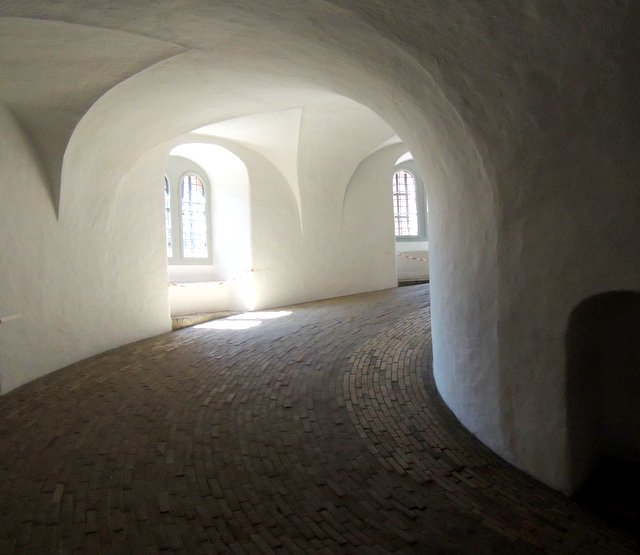
Then when I visited Copenhagen recently I climbed the 17th century Rundetarn (Round Tower) and discovered why. The Round Tower was the university’s observatory and has no steps until you get right to the top, just a beautiful circling brick slope. Close to the top is a chamber with exhibits and one of them, in a void under the floor, was a book from the university library with a large chunk ripped out of it and the shattered remains of a shell. The label explained that this was part of the dreadful damage done when the British bombarded the city in September 1807.


Wondering rather nervously why the Danes were so pleasant to the British if we had done that much damage – and confused about what had happened when I’d always assumed Denmark-Norway (as it was then) was neutral – I climbed to the very top of the tower and saw why it had been such an easy target. The views are fabulous (and for those who are fans of Scandinavian crime drama on TV, the bridge in the far background of the shot is "The Bridge").

When I visited the excellent Royal Danish Arsenal Museum I discovered what had happened.

Danish and Norwegian commercial shipping thrived during the French wars with Britain in the late 18th century – sailing under a neutral flag they did business with both sides. But by 1798 Britain had control of the world oceans and did not want to stand by while neutral countries traded with France and broke their blockades, so the British navy began to intercept cargoes destined for France.

Danish-Norwegian shipping began to sail in convoys with  naval escorts, leading to numerous armed skirmishes and in December 1800 Denmark-Norway joined a league of armed neutrality with Russia, Sweden and Prussia. Britain retaliated by sending a fleet under Admiral Sir Hyde Parker, with his second in command, Lord Nelson, into the Baltic. On April 2 1801 the British attacked ferociously with over 15,000 shots fired in four and a half hours. Many ships fled or were captured and Nelson came ashore and threatened to burn all captured ships, regardless of their crews. The government backed down, allowing Britain to take control of the Baltic and to cut off all cargoes that would benefit France.


The Danes now found themselves in an impossible position. The French marched into Zeeland and the British were in the Baltic – they were caught in the middle. The British government believed the French would invade and take over the sizeable Danish fleet and so asked them to hand over the ships. On the other hand the French were pressing them to allow their troops onto Danish soil. The Danes held out for neutrality but were so beleagured that in August 1807 they effectively declared war on Britain.

British troops under General Wellesley (later Wellington) fought the land battle of Koge, just south of Copenhagen and the city was encircled and bombarded by shells and Congreve rockets from land and sea between 5-7 September. There was vast devastation – almost 30% of the city was in ruins –  and the loss of over 2,000 civilian lives.

The Danes capitulated and the British took their naval stores and the entire fleet – including eighteen ships of the line and eleven frigates. It was not until 1814 that the Treaty of Kiel finally ended hostilities.

So now I know why Wellington called his horse Copenhagen – but I still don’t know why the Danes are so nice about it!

Louise Allen

Friday, July 05, 2013

In Praise of Meriol Trevor


When Meriol Trevor died in 2000, The Times obituary wrote at length about her two biographies of Cardinal Newman which won the James Tait Black Memorial Prize for Biography, and it mentioned her children’s novels with respect. But there was nothing at all about her historical romantic adventures set, mainly in Luxembourg during the Napoleonic Wars, all published in the 1970s.

I have five of her Luxembourg novels and I’ve always enjoyed them. What interests Trevor is how people cope in times of war. Luxembourg, once a duchy in the Holy Roman Empire, has fallen to Bonaparte’s armies, and is now ruled with an iron hand by the French. The guillotine is set up in the town square – and it’s not just for show. The Luxembourgers are faced with a stark choice: become a Bonapartist and support the new regime or face the consequences.

In The Marked Man, Count Gabriel d’Erlen vows to fight on. Wild, passionate and impulsive as a youth, he now leads a band of partisans in the forest, dedicated to guerrilla warfare. His family home, Villerange, has been turned into a girls’ school, set up by stern Republican Monsieur de TrĂ©vires, whose dreamy daughter, the eighteen-year-old Claudine, is a senior pupil.

Claudine finds herself torn by conflicting loyalties: will she betray the wounded stranger she finds hiding in the Chateau de Villerange, or will she defy her father and the republican principles she has grown up with and help Gabriel escape? Claudine must face all the terrors and uncertainties of love and war and learn to trust her own heart.

In The Forgotten Country, Alix d’Erlen, married off at sixteen to an elderly nobleman, is now twenty-eight, beautiful, intelligent and a widow. Disgusted by her husband’s impotent fumblings, she wants nothing more than a life of chaste seclusion. But she has reckoned without the Emperor Napoleon, who likes arranging matches between ladies of the Ancien RĂ©gime and his parvenu generals. Alix is desperate not to be married off to the emperor’s choice and when the calm, cultured Conrad de Berthol, a fellow Luxembourgian, proposes, she hastily accepts him, assuming that their marriage will be a cool, distant affair.

They return to Conrad’s castle in Luxembourg where she discovers, to her horror, that he is in love with her. Instantly, all her barriers go up. But then events take a sinister turn. Soon, Conrad is on the run with a price on his head. Alix, faced with the very real possibility of his execution, discovers a depth of emotion she did not know she possessed.

I bought several of her books in a library sale and I asked the librarian why he was getting rid of them. He said, ‘We’ve tried to promote them several times but, somehow, they don’t ‘take’.’ They are possibly a touch literary for some readers, and she tends to head hop. She doesn’t go through the bedroom door but she certainly gets across the sexual chemistry between hero and heroine. On the other hand, her plots are terrific and there is plenty of emotion, excitement and danger. She obviously knew her chosen period well and her depiction of Luxembourg under French occupation is absolutely convincing.

I’ve always enjoyed them and I can’t say fairer than that.

Elizabeth Hawksley

Friday, April 19, 2013

Scarlet Coats and Loud Bangs!

The 95th prepare to shoot in front of the Rotunda at Ickworth House
I spent a great day earlier this month at Ickworth House with fellow Regency author Annie Burrows. We'd gone to see the 95th Rifles holding their first training camp of the year and they were also being filmed for the http://www.waterloo200.org/ website where there is lots of information about the build-up to the 200th anniversary of the Battle of Waterloo.
You wouldn't want to get on the wrong side of this sargeant, armed with his long pike.


Annie and I were particularly interested in the artillery and although they only had a couple of small pieces of field artillery there they produced very loud bangs and a considerable amount of smoke. It was clear that wth several guns firing in anger on the battlefield the amount of smoke would make the visibility extremely poor.


The uniforms were all completely authentic and it was great to be able to get up close and see the details. Above are some of the different headgear - the 95th were not the only unit taking part - and below is a shot of all the items in a soldier's pack.
 

At Waterloo there were a wide range of nationalities represented amongst the Allied troops. Below on the left are a group of Brunswick troops with their gruesome skull and crossbones cap badges and black horse tail plumes talking to a couple of Riflemen. Soldiers from a Scottish regiment can be glimpsed behind.
 
And finally here are the French, marching back to camp after a hard day spent being shot at for the film makers! You can fidn out more about the 95th Rifles at www.95th-rifles.co.uk


Louise Allen
 
Tarnished Amongst the Ton Harlequin Mills & Boon April 2013