Showing posts with label Napoleonic prisoners of war. Show all posts

Thursday, July 07, 2011

Life in the Country Town

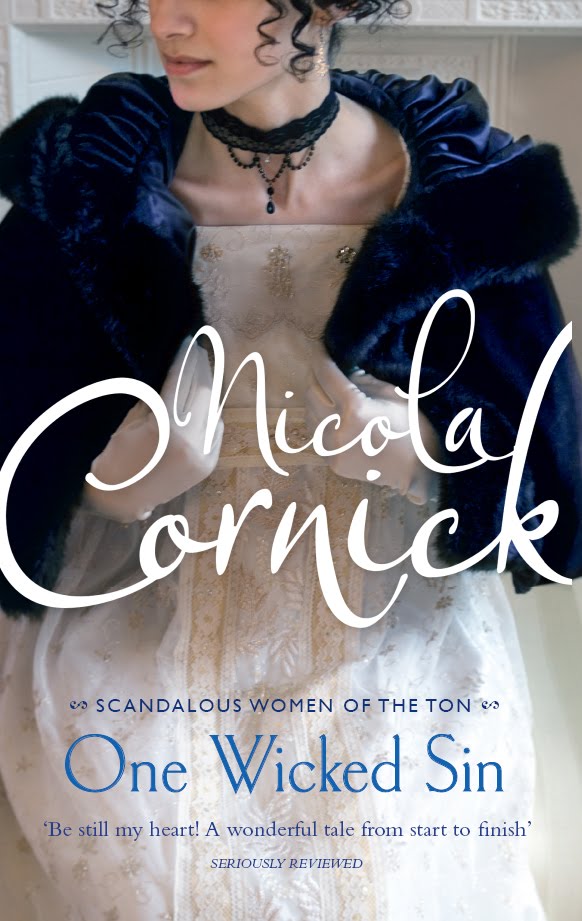
One Wicked Sin, book 2 in my Scandalous Women of the Ton Series, is out in the UK this month and I am very excited about it! I have been doing a series of radio and newspaper interviews to promote the series and one of the things that has fascinated readers is the idea that One Wicked Sin is set in Wantage when it was a parole town.


The idea of a small county town having to accommodate an influx of foreign prisoners fascinates me. At the end of the eighteenth century Wantage had the reputation of being very rough; as well as the prisoners of war, it's permanent population was swollen by the navvies working on the nearby Wiltshire and Berkshire Canal. There were reports of fights in the local inns between the townsfolk and the "incomers," and visitors to the area were warned not to visit Wantage as it was the sort of place where you might be robbed, beaten or worse.


I've always enjoyed reading reports from local newspapers of the era and from these one can gather all sorts of information on local life which often was a great deal stranger than fiction. I've included a few examples here just to give a taste of news from the English country towns.


From the Bury and Norwich Post, January 1801: "The following extraordinary incident took place at St Ives on Monday. A bullock walked into the passage of the Royal Oak public-house in the town and the staircase door being open, it went upstairs into the dining-room and ran with such violence against the front window (which was a sash) as to drive the whole window-frame into the street... It received no material injury."


From The County Chronicle, August 1801: "The young gentlemen of Eton, on leaving school for the Midsummer vacation, took their annual aquatic excursion to Surley-Hall... The young gentlement exhibited great skill in rowing, and were all attired in fancy dresses. In the evening some beautiful fireworks were let off and the day concluded with festive mirth and innocent entertainment."


From The Suffolk Chronicle 1815: "It is with the deepest regret we learn that a riotous disposition has shewn itself in the parish of Gosbeck... On Tuesday last, twenty deluded persons assembled and in a wanton and most disorderly manner they destroyed two threshing machines and threatened to destroy others."


From the Norfolk Chronicle, March 1806: "Tuesday morning last, we understand, an affair of honour was conducted between Captain RN and GT of the militia in garrison. A brace of pistols was discharged without effect. Upon the seconds interfering, the affair was honourably terminated. The cause of the misunderstanding we are not acquainted with."

Thursday, April 07, 2011

Prisoners of the Parole Towns


I am very pleased and excited to report that my book One Wicked Sin is a finalist not only for the Romance Writers of America RITA Award for Best Historical Romance but also for the Colorado Award of Excellence as well!


The research I did for this book was fascinating, drawing on the experience of Napoleonic prisoners of war in Britain. A little while ago Louise blogged about the prisoner of war camp built at Norman Cross in 1797 and excavated recently by Channel 4’s Time Team. Thousands of prisoners of war were also housed in prison hulks and in medieval castles turned gaols such as Portchester and Edinburgh. But the background to One Wicked Sin looked at a different side of the prisoner experience, that of the officers who were accommodated in parole towns across the country.


There were 50 parole towns across Britain, ranging from Kelso in the Scottish Borders to Abergavenny in Wales to Wincanton in Somerset. Each town could house between 200 – 300 officers. One thing that struck me immediately about the parole town experience was that these were small country or market towns as opposed to big cities. What must it have been like suddenly to have hundreds of prisoners of war living amid the small local populace? And not just French prisoners but other nationalities as well - Danish, Irish, Spanish, American and many more.


Before any officer was permitted to reside in a parole town he had to sign up to certain terms and conditions including that he could not go further than a mile out of the town and that he had to observe a curfew. Perhaps the terms should also have included that he should not attempt to elope with a local girl – several officers did! The British authorities gave each French officer a half a guinea a week for living expenses and the more resourceful supplemented their income by teaching French or dancing or setting up in business. However half a guinea evidently was not sufficient for some of the officers. In Wantage, where One Wicked Sin is set, one French colonel wrote to his bankers, Coutts in London, asking them to transfer funds to the local bank because he simply could not manage on such a pittance!


The history of the parole towns is a fascinating one and the French prisoners of war have left surprisingly little trace in the written records of the towns where they lived amongst the population for a number of years. Their legacy lives on however in the businesses they started and thefamilies they married into. In contrast to the officers the non-commissioned prisoners have left their mark on the landscape. They laboured on many engineering projects of the early nineteenth century from canal building to docks. Putting together their stories and learning about their experiences has been a very interesting process. One of the few memorials that I discovered to the parole prisoners is this one at Leek in Staffordshire.


One Wicked Sin was published in the US last year and will be coming out in the UK in July from MIRA.

Wednesday, January 19, 2011

Prison of War

I was fascinated by the Time Team programme last year about the excavations at the Norman Cross Napoleonic prisoner of war camp. All that can be seen of that establishment now is a faint outline in aerial photographs and a monument by the side of the A1.

But there was another camp that has survived, although in a very different form - Dartmoor Prison.
In September 1810 Ackermann's Repository printed this double page spread of the new prison (erected at a cost of £200,000)with a lengthy article "to pay a just tribute of applause to the judicious regulations, which ensure kind treatment and humane attention to the unfortunate victims of war." Whether the 6,000 prisoners who could be incarcerated here would have viewed it in quite that light is open to doubt!

"Perhaps a more healthy spot might have been selected", the article concludes, having reviewed the climate of Dartmoor, but otherwise the tone is of considerable admiration. Bedding is aired daily "when the weather allows", the hospital "is kept in the most exact state of cleanliness and order" and "every patient, previous to admission, undergoes a proper ablution in the bath." Whether the other prisoners ever managed to have a bath is not stated.

"The prisoners of war...wear a yellow uniform, occasionally striped with blue. So conspicuous and universal a dress renders their escape impracticable, supposing them at large beyond the prison walls."

The prisoners elected their own representatives to meet with the prison authorities to discuss problems with rations or accommodation and "a well supplied daily market is held in the agent's square where provisons of every kind are sold at a moderate price." It was presumably here that the prisoners would sell the handywork that they produced from bone and other scraps - and which now fetch such high prices as antiques!

The smaller enclosure to the right of the picture is the barracks which held 5-600 hundred men and their officers with Plymouth regiments taking two month turns of duty at the prison. 180 soldiers were on duty inside the prison itself at all times.

The author of the article considers that they have "a severe duty" but this was alieviated for the officers by invitations to Tor Royal, the seat of Thomas Tyrwhitt, Esq. MP for Plymouth who lived a mile and a half from the barracks. There they might expect "an amenity of manners, suavity of disposition, and inhaustible fund of anecdote and a hearty welcome to crown the hospitable board."

At the termination of the war...it is said to be in contemplation to convert this vast building into a receptacle for convicts, whose labours on the moor will prove highly important and beneficial to the nation and an incredible saving in the enormous expense incurred both at home and in transportation."