Tuesday, September 28, 2010

Emily and the Dark Angel

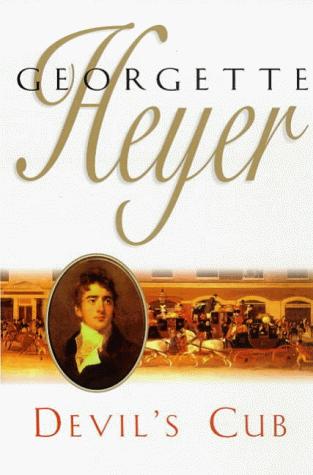
When I wrote Emily and the Dark Angel back in the early nineties, I had no concerns about the Melton Mowbray setting, or about including fox hunting. It was such a central part of life for many upper class Regency men. I didn't get any negative feedback then, either, but this time around a few people have said they feel uncomfortable with it.

Writing historical fiction can involve interesting choices, can't it? It's usually possible to simply ignore or write around some things, like dentistry, for example, but to me hunting in the Shires is so central it's part of it all.

It's also fascinating, and full of great stories. For example, there was an inclusiveness to hunting then, for the men at least. If a man had a horse, he could hunt. There were local tradesmen hunting, and even a chimney sweep, complete with his brush. In the book I refer to the time a hot air balloon came down in the middle of a hunt, and that's true.

This image comes from 1st Art Gallery, where you can buy the print. No, I don't get a cut. I'm just giving fair credit.

Unless I've forgotten an instance, Jane Austen didn't mention fox hunting, but her books are all about the difficulties of finding a husband in her time, and fox hunting could have played a part in that.

The Regency period was truly a difficult one for women seeking husbands, and that informed Jane Austen's novels. The Napoleonic Wars had reduced the number of available gentlemen, and there were interesting demographic changes that added to the problems. Essentially, life expectancy was increasing in the upper classes, squeezing the income of gentry families by increased family size and long-lived widows, with their assured jointures. Younger sons couldn't afford to marry; daughters had reduced portions; even oldest sons who inherited decided not to marry so as not to bring another potential widow into the family.

But also, a lot of the men spent the winter and early spring in the Shires.

I have wondered if this is part of the reason that the Season moved to later spring in the Regency, when it previously began in January.

This has little to do with Emily Grantwich's predicament, as she lives in the Melton area. She finds the influx of hunting men makes her life difficult, and it's difficult enough already. Her father has been crippled in a foolish duel and her brother is missing in action in the war. She's trying to hold the family estates together, and now the neighboring estate has been inherited by a Mr. Piers Verderan. All her friends and neighbours hurry to warn her to have nothing to do with such a notorious rake. No wonder he's called the Dark Angel -- he's even killed men in duels, and he threatens to shoot someone before her very eyes, and means it.

But even if Emily had wanted to avoid him, it proves impossible, and then she's not sure she wants to anyway. At times, he seems the only sane person around, and he's wakening a part of her she'd never known existed.

Emily and the Dark Angel won a RITA award when it was first published, and the Best Regency Romance award from Romantic Times, which also declared it a classic of the genre.

The handsome trade paperback publication will be out soon, and there's an excerpt here.


The book should soon be on shelves in North America. If you have trouble finding it in the UK, I suggest buying it from the Book Depository.

All my other Regency Romances are now available in new editions. You can find out about them here.

Best wishes,

Jo
For more information about my books, you can visit my website.

Monday, September 27, 2010

Regency Letters 7


Here is the next installment of the story in letters. I hope you enjoy them.
Anne Herries

Regency letters 7

My very dear mother and sister.

I must tell you that I found your brother and son very ill indeed. Dearest Robert hardly knew me when I reached him and in his fever he called for someone of whom I have no knowledge. I think it is a lady but I did not recognise the name. I was able to comfort him and after some hours of deep anxiety, he came back to me. The fever has broken though he seems in low spirits. He has asked me if I will take him home and stay with him until he feels able to return to his regiment. I have agreed to do this and shall write to Melton and tell him of my intention. If my sister is well enough to part with her mama, I think my brother would like to see her once we are at home. However, I shall not desert him while he is so low for I fear that he might sink into a decline if he were to spend too much time alone.

I must go now, because he will be wanting me to read to him. We hope to return home in three days and you should send your reply there.

Your loving daughter and sister Horatia.


My dear Melton

I have your letter of last week demanding that I return to you in London. Forgive me but I find I am unable to comply with your request, sir. My brother is still very unwell and I shall not leave him until he is able to return to his regiment.

I am sorry that you feel I have behaved badly. I assure you that I have done nothing I regret or of which I am ashamed. If you feel that the situation between us is irretrievable I would be agreeable to a separation and an amicable divorce in a year or so at your convenience.

I truly believe that our marriage was a mistake and regret any pain I may have caused you.

Horatia.


My dearest and true friend.

Your letters have been a wonderful support to me in this time of my brother’s illness. I could not tell Mama or my sister that I feared he would die for they would have come at once and he was too ill. Mama is a dear but she can be very trying and my sister is still recovering from her disappointment.

I have written to Melton and asked if he will agree to a separation. I am taking Robert to his estate soon and shall stay with him until he feels well again. After that…perhaps you will come to me at the estate, where we may be alone and talk of the future? I am quite determined that I shall not return to a life that contains nothing but unhappiness.

However, for the moment I know you will understand that Robert must come first with me. I know something is troubling him deeply and I think he must have suffered a disappointment for he is very low. My brother has always been so strong and confident and to see him like this is distressing. I have hopes that he will confide in me soon.

I shall count the hours until I see you, my very best of friends.

You have my love and always shall. Horatia

Saturday, September 25, 2010

A Regency Promenade!

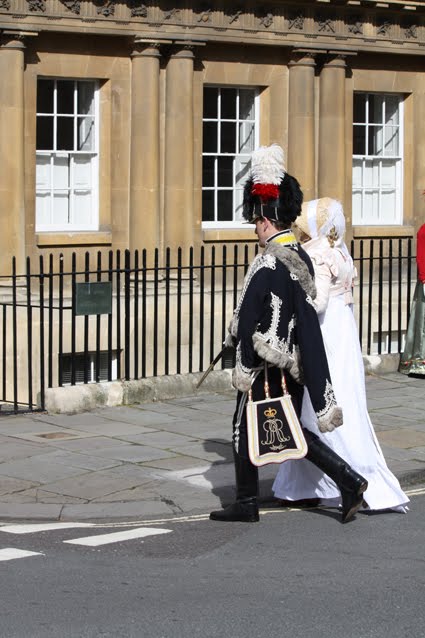
I was in Bath last weekend and popped along to the Regency Promenade which hails the start of the Jane Austen Festival. I met up with Victoria Connelly, a fellow member of the RNA whose book, A weekend with Mr Darcy has just hit the shelves. As you can see we had a lovely time looking at all the costumes, and even met Mr Darcy!
I'm thrilled to be able to show you the cover of my next book, Mr Darcy's Secret, which is to be published in February, 2011. I love the cover, I hope you like it too!
Jane Odiwe


Wednesday, September 22, 2010

London Open House Weekend

Have you ever wanted to get inside the Bank of England, Lloyds of London or go back stage at the National Theatre? Once a year, on the third weekend in September, London Open House weekend allows you to do just that when a huge number of public buildings - and some private ones - open their doors to the public.


Where to go this year?
In 2001, I published Frost Fair, set in London in the bitterly cold February of 1814, the date of the last Frost Fair on the Thames. I needed my hero, Noel, to live by the Thames, within reach of the fair. I put him in John Street, part of the magnificent Adelphi complex built by the Adam brothers. As it was pulled down in 1936 (an act of vandalism I find it hard to forgive) I worked from 19th century prints, old photographs and Richard Horwood's map, the updated 1813 edition, as the nearest I could get to what was once there.


Then, in the Open House booklet, I saw to my amazement that I could visit 8 John Adam St, which was built by the Adam brothers in 1774 for the RSA: Royal Society for the Encouragement of Arts, Manufactures & Commerce. It was in the street behind the demolished Adelphi Royal Terrace. The booklet promised me a suite of Adam rooms, cavernous brick vaults and the Great Room, an assembly room designed by Adam for discussions and debates. I could hardly wait.


The RSA building comprises five original properties: 2, 4, 6 and 8 John Adam St, together with 18 Adam St, originally the Adelphi Tavern and later the Adelphi Hotel. In Dickens' Pickwick Papers, Emily Wardle fled from her angry father and met her lover, Mr Snodgrass at the Adelphi Hotel. I hope they had time to enjoy the ravishing Adam ceiling with its delicate plasterwork and painted panel showing Pan celebrating the feast of Bacchus.


Numbers 2 and 4 were originally private houses, like the one Noel might have lived in, and very pretty they would have been, too, with their classical Adam dimensions, elegant staircases and carved Adam fireplaces. No 4 still has its wonderful painted Adam ceiling.

What particularly interested me, though, were the brick vaults in the basement. Originally intended as warehouse storage, they ran down to the Thames foreshore. In 1814, homeless people, desperate to escape the freezing temperatures outside, huddled inside the vaults for warmth. Nowadays, it's a classy, yet intimate space for weddings, conferences and press launches, with a five star restaurant.


I was also delighted to learn about the RSA itself. Founded in 1754 as an Enlightenment response to the industrial revolution, it saw itself as a force for social progress. Impressively, men and women were admitted on equal terms from the beginning; its early members included Benjamin Franklin, Dr Johnson and Elizabeth Montagu. Nowadays, it works to create a civilized society based on a sustainable economy by stimulating debate, developing new ideas and encouraging appropriate action.


All in all, it was a most interesting visit.


Pictures courtesy of the RSA. Top: the RSA; centre, the Adelphi room ceiling; bottom, the vaults.


Elizabeth Hawksley

Tuesday, September 21, 2010

Christmas in September?

I went to Sainsbury's yesterday - I lead a very exciting life! - and as I walked down the aisles I saw Lindt chocolate Christmas decorations on sale. My first thought was: Christmas? Already? And my second thought was: Lindt chocolate :)) I was about to walk nobly by when I remembered how frustrating it was to go shopping for chocolate tree decorations in December last year and not find any. So I succumbed to temptation and bought a row of chocolate snowmen. It was, of course, a big mistake. This morning, half of them have already been eaten and I don't suppose the rest will last very long.

So in the same spirit I thought I would blog today about A Darcy Christmas, which is out next week (October 1). It's a collection of 3 novellas and my contribution is called Christmas Present.

When I was asked to write the novella I knew at once what I wanted to write about. I left Darcy and Elizabeth at the end of Mr Darcy's Diary with the suggestion that Elizabeth was pregnant, and as the following Christmas occurs nine months later, I think you can guess what happens!

I had such a lot of fun gathering together all my favourite characters for a large house party at Jane and Bingley's new estate. Lizzy and Darcy are there, as are Lizzy's family (minus Lydia). Lady Catherine and Mr Collins arrive unexpectedly, having been on their way north when they were cut off by heavy snow, and there are some new characters as well. But this is how it all starts:


CHRISTMAS PRESENT

It is a truth universally acknowledged, that a married man in possession of a good fortune, must be in want of an heir, and Mr Darcy of Pemberley, was soon to have that want satisfied. Elizabeth was expecting their first child and he looked at her with pride as she sat across the breakfast table from him, reading her mail. She opened another letter and her face broke into a smile.

‘Jane has had the baby!’ she said. ‘A boy!’
‘So Bingley is a father,’ said Darcy with evident pleasure.
‘And Jane is a mother. Oh, my dear Jane, how proud and pleased she must be. Bingley is besotted,’ said Elizabeth, returning to her letter. ‘Jane says she can scarcely persuade him to leave the nursery to eat and sleep. She adds, “and it is not to be wondered at, for little Charles is the most beautiful baby you have ever seen”.’ Elizabeth looked up at Darcy. ‘Jane would like us to stay with her for Christmas. She says she can wait no longer to show us the new baby, as well as the new house. I am sure I cannot wait to see them. I will give orders for the packing at once.’
‘No, we cannot go and see them just yet,’ said Darcy, looking at his wife’s full figure as she rose unsteadily to her feet. ‘You forget your condition.’
‘I never forget my condition,’ she said with a rueful smile, resting her hand on her rounded stomach.

‘We will wait a few weeks nevertheless,’ he said. ‘It will be better that way.’
‘What nonsense! I am perfectly able to climb into the carriage, and that is all I need to do,’ she said, laughing at him.
‘But you might have the baby on the way!’ he said.
‘And I might not,’ she replied.
‘We might be in a lonely spot, with no midwife to hand, and nothing but the coach to shelter you,’ he protested. ‘No hot water, no maids, no Mrs Reynolds. No, Lizzy, it will not do. I am sorry, my love, but I forbid it.’
Instead of meekly obeying her lord and master’s command, Lizzy’s eyes sparkled and she said, ‘Ah! I knew how it would be. When we were newly married, you would deny me nothing, but now that a year and more has passed you are showing your true colours and you expect me to obey you in everything!’

‘I doubt if you have ever obeyed anyone in your life,’ he returned, sitting back and looking at her with a smile playing about his lips.
‘No, indeed I have not, for I have a mind of my own and I like to use it,’ she said. ‘Otherwise, it might grow rusty with neglect.’
He laughed. But he was not to be so easily talked out of his fears.
‘Only consider —’
‘I have considered!’ she said. And then, more seriously, ‘Believe me, I have. I have scarcely ventured beyond the flower gardens these past few weeks and for the last sennight I have barely set foot out of the door, but I cannot do so forever. It is very wearing, and very tedious. Mama’s first child was three weeks late and if I am the same there will be plenty of time for us to go and see Jane’s baby, and still return to Pemberley before our baby is born. And besides, I want a family Christmas.’
‘Then let us invite your family here.’

‘No, it would not do,’ said Lizzy, sitting down again. ‘Jane and the baby cannot travel. Besides, it is already arranged that the family will visit Jane’s new residence, Lowlands Park. Jane’s housekeeper has been preparing for the event for weeks. The rooms have been aired, the larder stocked and the beds made up.’ She took pity on him and said, ‘Jane’s new house is not so very far away. If we leave Pemberley after lunch we will be there in time for dinner, scarcely time for anything to happen. I promise you, if I feel any twinges before we set out then we will delay the journey.’
‘And what if you feel a twinge when we are halfway to Jane’s?’
‘Then we will carry on our way and I will be well looked after as soon as we arrive.’ As he still looked dubious, she continued. ‘You know what the midwife said, ladies in my condition must be humoured, and my mind is made up.’


I loved writing it and I hope it will be a treat for Darcy fans everywhere this Christmas.

Amanda Grange

Saturday, September 18, 2010

The Second Scandalous Sister

This month sees the publication of the second of my Transformation of the Shelley Sisters trilogy with Vicar's Daughter to Viscount's Lady. I'm particularly pleased that I have a book out this month because it is one of the first with the new style covers which I think are gorgeous.

In the first of the trilogy - Practical Widow to Passionate Mistress - Meg, the middle sister, found happiness after the tragedy of her elopement and being stranded in the Peninsula.

Vicar's Daughter is the story of the eldest sister, Arabella, the dutiful long-suffering sensible sister who fears she is fated to live her life as a spinster companion to their tyranical and puritanical father.

But Bella falls in love - or she thinks she does, until it all goes wrong and she finds herself alone, pregnant and utterly determined to make her seducer marry her for the sake of her child. But when she arrives on Lord Hadleigh's doorstep she is in for a shocking surprise.
Here is an extract, the moment when Bella realises that even determination will not be enough.

‘His lordship is not At Home.’
‘Lord Hadleigh will wish to see me whether he is receiving or not. Kindly tell him that Miss Shelley is here.’ She stepped forward and the butler, caught off-guard, stepped back. ‘Thank you. I will wait in the salon, shall I?’ She dumped her bag by the door.
The butler received her sodden cloak and then looked as though he might drop it, but in the face of her accent, her certainty and one lifted eyebrow, he ushered her into a reception room.
‘I will inform his lordship of your arrival.’
It had been too much to hope the man would offer such an unconventional arrival a cup of tea. Bella eyed the satin upholstery, decided not to sit on it in her damp skirts despite her shaking legs and tried to study the pictures on the wall.
She had hardly time realise she could not focus on the first when the butler returned. ‘His lordship will receive you in the study, Miss Shelley.’
The room tilted a little. Rafe, at last. Please, God. Let me do this right. Let him have some shred of pity. ‘Thank you.’
The study was on the north side of the house, deep in shadows. A fire flickered in the grate, the only light, a green-shaded reading lamp, was focused down onto papers on the desk. It illuminated the lines of Rafe’s jaw, the edge of his cheekbones, the glint of his eyes as he stood, but not much more.
‘Miss Shelley.’
So formal, so calm: he is concerned that the butler might come back. His voice seemed deeper, perhaps that was surprise at seeing her. He did not sound angry. That would come and she had tasted his anger, his fury at any attempt to thwart or contradict him.
‘Rafe... My lord, I had to come.’ She stepped towards him but his left hand lifted, gestured towards a chair, and the firelight caught the flame of the familiar cabochon ruby on his ring. That hand, sliding slowly down over her breast, over the pale curve of her belly, down…
‘Thank you, but no.’ It left him on his feet too, a shadowy figure behind the desk, but she was too strung up to sit. ‘You will be surprised to see me.’
‘Indeed.’ Still no anger. Perhaps this cool distance was worse: he did not seem to even know her.
Bella felt a fresh pang of apprehension, a wave of hot shame that she was in this position.
‘When you … left me you made it clear you never wanted to see me again.’ Silly little sentimental fool… Clumsy country wench - the only thing you can do on your knees is pray… So easy, so gullible and not worth the effort. He had slapped her face when she began to weep.
Rafe shifted abruptly, then was still, remaining behind the desk. ‘And yet you are here.’
She could not read the emotion in his voice. The shadows seemed to shift and sway. It was necessary to breathe, to be silent for a moment or two while she fought the nausea and the shame. He was going to make her spell it out, he was not going to offer her the slightest help to stammer out her demands.
She felt her knees trembling, but somehow she dare not sit down. Something dreadful was happening, just as her worst fears had told her, and she needed to be on her feet to face it. He was so cold, so distant. He is going to refuse. ‘I am with child. Our child, Rafe.’
‘I see.’ He sounded remarkably calm about it. She had expected anger, shouting. Only the flash of that ruby in the firelight showed any sign of movement.
‘You promised me marriage or I would never have…never… I know what you said when we parted but we must consider the baby now, Rafe.’
She could almost feel the emotion flowing from him in waves now, belying his calm ton. But she could not decipher it, except to feel the anger, rigidly suppressed. Perhaps it was her own fear and humiliation she could feel. Bella pulled air down into her lungs and took an unobtrusive grip on the back of the nearest chair.
‘You are certain that you are with child?’ That deep, dispassionate voice unnerved her as much as his words. Rafe had always been laughing, or whispering or murmuring soft, heated endearments. Or at the end hurling cutting, sneering gibes. He had not sounded like this.
‘Of course! Rafe - ‘ She took a step towards him but his hand came up again and she froze. There was a silence. She could tell in the light of the reading lamp that Rafe had bowed his head as though in thought. Then he looked up. ‘And you came here thinking to marry Rafe Calne? That will not happen, child or no child.’

Louise Allen

Friday, September 17, 2010

New Ventures


Earlier this week I received the news every writer dreads: an email from my agent telling me my latest book had been turned down. There was some softening of the blow: the publisher thought the story excellent, equally as good as the previous two they had published; and she considered me a very good writer. Unfortunately, though my previous books had received good reviews in the US, this hadn’t translated into sufficient sales. Given that any new publisher my agent might approach would immediately look at my previous sales figures, the likelihood of my having this or any other new book accepted in the current climate are equivalent to the survival of a snowball in hell. Does that mean that after twenty-eight books my career of over thirty years has come to an abrupt and ignominious end? Not if I can help it.
Yes, for the rest of that day I felt really low. But there are times in life when a hefty kick out of one’s comfort zone can be a good thing. I’ve read about e-publishing, and felt awed admiration for authors who, taking all the formatting requirements in their stride, have achieved considerable success. With a brand new mss to offer which my previous publisher likes very much, I’m going to give it a try. I’ve chosen one which, if they accept the new book, will also consider previously published books – of which I have several now out of print. I also plan to explore the short story and serial market. This will be a challenge as I’ve always preferred the larger landscape of a novel. But we’re told that trying something new is what keeps the brain young. Having recently changed my Windows XP laptop I’m still finding my way around Windows 7 which no longer supports Outlook Express, so that meant learning a new email system as well, AND a different edition of Word, I’m not sure my brain would agree. So when I’m found curled up on the sofa with a cup of tea, chocolate biscuits and a pile of Women’s magazines I shall be involved in vital market research.

Jane Jackson

Wednesday, September 15, 2010

Top Ten Sexy Reads!


I was delighted to learn this week that Bride of the Solway, my September Harlequin release in North America, has made the Top Ten Sexy Reads on eHarlequin! To whet your appetite, I thought you might like to read an extract from a later stage of the story, when things are beginning to get...well…a little interesting. So here it is. Enjoy!


Ross and Cassie are escaping on foot from their dangerous pursuers. It is freezing cold, clouds have blocked out the last hint of starlight, and the pouring rain has soaked them both. Ross has managed to find a ruined barn where they shelter together in the pitch dark. They can smell and hear and touch. But they can see nothing at all…

He started to search through the pockets of his coat but stopped with a curse so violent that Cassie gasped. ‘Forgive me. I did not mean to shock you, but I am an idiot. Just look what I have found.’

‘I would if I could, but I’m afraid my cat’s eyes seem to have deserted me for the moment. What is it?’

‘My brandy flask.’ He started to unscrew the top. ‘This will help to ward off the chill, Cassie. You need to get warm.’ He pulled her against him and put the flask to her lips.

She pushed it a way, with a cry of protest. ‘Ugh! I can’t drink spirits. You will make me drunk.’

‘Cassie, you are as stubborn as a Spanish mule. You are soaked through, you’re shivering with cold, you haven’t eaten all day, but you refuse the only thing we have that might help?’ He picked up a handful of hay and thrust it at her till it touched her skin. ‘You could always eat the hay, of course, but since you are not a horse, I venture to suggest that the brandy would do you more good.’ His anger was perilously near the surface now. Did she not understand the danger she was in? He almost wanted to shake her. And to force the brandy down her throat.

Very gently, she opened his fingers and removed the wisps of hay. ‘I’m sorry,’ she said quietly, putting her hand in his. ‘I didn’t mean to vex you. I know you have my best interests at heart.’

‘Then, will you—’

Without letting him finish, she took the open flask from his hand and swallowed a large gulp.

‘Cassie, you can’t—’ It was much too late. She was already coughing and spluttering as the spirit burnt its way down her throat.

‘I—’ Her voice was a barely audible croak.

Ross quickly set the flask down and pulled Cassie into his arms, kissing the top of her head. His anger had evaporated on the spot. He only hoped she would not realise that he was laughing.

But she had. ‘You rogue,’ she wheezed as soon as she had a little control of her voice again. ‘You’re laughing at me.’

‘Well, you did rather remind me of a frog.’

‘Oh? I’m happy to admit that I am wet and cold, as frogs are, but I didn’t think I was green.’

He laughed again but this time she was laughing with him. ‘You may indeed turn green if you stay as wet as you are. Seriously, you must get warm. I dare not build a fire, just in case. So we shall have to make the best of what we have. Lie down here with me. My coat can cover us. It’s heavier than your cloak and perhaps not so wet on the inside.’

She did as he bade her, apparently without a qualm. Most other ladies would have had a fit of the vapours at the thought. But most other ladies would not have been alone with a man in the first place.

He pulled her body close against the length of his own, trying to warm every inch of her. He tucked the coat around her as best he could. His boots were sticking out, but her poor injured feet were, mercifully, covered.

‘Are you feeling any warmer now?’

‘Yes. Much,’ she whispered. ‘I can certainly feel the effects of the brandy now.’

‘Good.’ He held her even closer. ‘Try to go to sleep if you can.’ He tucked her head under his chin. Her hair had come down around her shoulders in a mass of damp, tangled curls. Exactly like the first time he had ever seen her. A sodden gown and a mass of tangled hair.

She moaned a little.

‘Cassie?’

‘It is nothing. Truly.’

This time her body was betraying her, for she had started to shake uncontrollably. The noise of her chattering teeth was incredibly loud in the dark silence.

‘This is no good. We must get you out of those wet clothes. There’s no other way.’ Ignoring her stammering protest, he threw off the greatcoat and pulled her up so that he could start undoing her gown.

‘Sir, you cannot—’ she managed between shivers.

‘This is no time for propriety, Cassie. If we don’t get you dry, you’ll never recover from this.’ He was running his hands down the back of her gown as he spoke. ‘Dammit. Where are the fastenings on this confounded garment?’


You may already be imagining what happens next. Two people alone in the dark, huddling together for warmth and comfort, skin against skin...

Joanna
http://www.joannamaitland.com

Sunday, September 12, 2010

Guest blogger Christina Courtenay

We're delighted to welcome Christina Courtenay to the blog. She's talking to us about her latest book, Trade Winds, published by Choc Lit. Over to you, Christina!

Thank you, it's good to be here!

Trade Winds is the story of handsome Scotsman Killian Kinross, who goes to Sweden in the hope of making his fortune. There he meets strong-willed Jess van Sandt, a merchant’s daughter who believes she’s being swindled out of her inheritance by her step-father. They join forces for mutual benefit and enter into a marriage of convenience, but then Killian is offered the chance of a lifetime with the Swedish East India Company. He sets sail for China, but the journey doesn’t turn out quite as he expected ...


Although I love most periods of history, strangely enough I had never considered setting a novel in Georgian times. I much preferred the Regency, Civil War or even the Viking era, which seemed to me to be a lot more exciting somehow. When I had the idea of basing a novel on the first journey of the Swedish East India Company, however, I was forced to change my mind. First of all, I had no choice as to the date obviously, if I wanted to stick to the historical facts. And once I began to read up on the period, I realised that the scope for romance was just as great during the 1730’s as later on. I’m not even sure why I’d ever doubted it!

Despite being half Swedish, it had never occurred to me to set a historical in that country either, unless it was to do with the Vikings. It’s such a long time since I studied Swedish history, I’d forgotten that they were actually quite a powerful nation at one time. They held sway over large parts of northern Europe, as well as the Baltic states of Latvia, Estonia and Lithuania. Trade between Sweden and Scotland had also been on-going for centuries (if not millennia!) and I was thrilled to be able to combine characters from these two countries. I’ve always loved Scottish heroes (who can fail to fall for a man in a kilt and with that wonderful accent ...??) and I felt sure a Swedish heroine would be the perfect match for him.

It wasn’t until I went to Gothenburg to do some research, however, that I realised just how much influence the Scots and other foreigners had had on this city. It was built largely by Dutchmen since it involved the creation of canals. Clearly, they were the acknowledged experts at building those. But as soon as trade started up, the Scotsmen weren’t far behind. The city became quite a melting pot, which was perfect for my purposes, and I discovered a wealth of material at the Gothenburg City Museum.

Most of the canals are gone nowadays, but the main one still remains. It was fascinating to walk around the centre of the town, which is small enough to be easily traversed on foot. The houses have changed, of course, since the 1730’s – back then they were mostly made of wood – but I could still close my eyes and imagine what it would have been like. As for the biting wind from the sea, that must have been almost unbearable without the protection of modern clothing (I was there in February)! Invaluable for me though, as my story was set in winter.

I’m very pleased that I was able to combine my own Swedish heritage with my love of the Far East.

Thanks, Christina, the book looks fascinating and what a beautiful cover! Trade Winds is published by Choc Lit, (ISBN no. 978-1-906931-23-0) and it's out this month. The official release date is 30th September, but Amazon and The Book Depository are sending copies out already so what are you waiting for?!!

Saturday, September 11, 2010

A Tribute to Female healers

I'm delighted to welcome Gayle Wilson, another of the Regency Silk & Scandal authors, to Historical Romance UK.
Gayle's book, Claiming the Forbidden Bride is the fourth in the series and tells the story of returning soldier Rhys Morgan and his encounter with Romany beauty Nadya Argentari, her tribe's healer. I was fascinated by the Romany lore Gayle had researched for the book and here is her insight into the world of a female healer.


From prehistoric times man has used substances derived from plants to treat or prevent disease. It is possible that the impetus to do so originally came from watching animals, some of whom seem to know instinctively which flora should be eaten in order to alleviate their ailments. The plants they choose at such times are invariably rich in phytochemicals, now recognized to possess antibacterial, antiviral and antifungal properties.

Ancient civilizations including those of Egypt, China, and India were well aware of the healing properties of plants and other natural substances such as honey and garlic and used them to treat illnesses and to heal wounds. This valuable knowledge was passed down in both the writings of physicians like Hippocrates as well as in the oral traditions of so-called natural healers.

Although female healers were frequently targeted by the Inquisition as practicing witchcraft, much of their wisdom survived into the modern era. Perhaps the best known examples of plants used by these healers as well as by modern, conventional medicine are foxglove, from which the heart regulator digitalis is derived; willow bark, the original source of the analgesic, fever-reducing, and anti-inflammatory miracle drug aspirin; and the opium poppy, which produces both morphine and codeine.

In Claiming the Forbidden Bride, the Romany heroine Nadya Argentari was trained in such medicinals by her grandmother, and her knowledge of herbal remedies plays a major role in the story. Rhys Morgan, the hero, suffers a recurrence of the malaria he contracted during his military service on the Iberian Peninsula. Nadya successfully treats him with a tea made from bark and castigates the English medical community of the time for persisting in the use of other less effective treatments—such as bleeding, purging or blistering—for the disease.

The fact that the bark of the South American cinchona tree, which contains alkaloid quinine, has the ability to cure malaria was well known in much of the world by the early 19th century, but the antimalarial was not widely used in England. The bark does not cure fevers other than malaria, so doctors dismissed its healing properties altogether. Also, the fact that the Catholic Church, and particularly the Jesuits, touted the bark’s effectiveness worked against its acceptance in Protestant England, as did the teachings of the Greek physician Galen, then considered the ultimate source of medical knowledge by many European doctors.

The nomadic Rom would almost certainly have encountered cinchona bark, which had been imported into Europe as early as the 17th century. Nadya’s grandmother, who was the drabarni or wise woman before her, would undoubtedly have been familiar with the effectiveness of the so-called Peruvian bark against malaria and would surely have passed that knowledge down to her granddaughter.

By featuring these two fictional healers in my novel, I hope in some small way to have paid homage to the tradition of natural medicines and to the women who helped preserve the herbal knowledge of the ancients, even in the face of persecution and scorn from their “educated” peers. We all owe them a great debt.

Thak you for the insight, Gayle! The illustration is by WH Pyne and shows a group of early 19thc Romanies by their camp fire.

Louise Allen

Thursday, September 09, 2010

Calling all Austen fans!!!!

How do I love Jane Austen? Let me count the ways.

1) I love her novels
2) I love her world
3) I love the films and TV adaptations that bring her world to life
4) I love the books that continue her stories or explore the lives of her characters


If you, too, love 4) then there's a wonderful new blog that is just for you. It's called Austen Authors and it gathers together a large number of traditionally published authors whose books entertain Austen fans hungry for more. Regular contributors include our own Monica Fairview and Jane Odiwe and yours truly is guest blogging there tomorrow.

September is the launch month and there are competitions galore, with competitions and general fun, and of course lots of books being given away!

Head on over there now if you want to read one of the funniest and most unusual road to publication stories I've ever read, that of Abigail Reynolds. Abigail is a successful physician whose Austen addiction was a secret until one fateful phone call changed everything . . .

Amanda Grange

Tuesday, September 07, 2010

Your First Regency Romance

What was the first Regency romance you read? A few weeks ago on another blog we were discussing our first romance books and not surprisingly a lot of these were Regencies. Even less surprising, perhaps, many people came to Regency romance through Georgette Heyer.

I was one of those who ran through practically all of GH's books in my teens. But once I had read them (several times) I needed more books to feed my burgeoning Regency addiction so I turned to other authors including Clare Darcy, Sheila Walsh and Alice Chetwynd Ley. Alice Chetwynd Ley's books were my favourites. I still have every one of her books on my keeper shelf with The Beau and the Bluestocking and The Jewelled Snuffbox in pride of place. Sheila Bishop's A Speaking Likeness is another one I still have. It sums up the feelings of the hero and heroine at the end of the book with the line: "They were violently in love and they knew it." A far cry from the depth of emotional description that many publishers require from their authors today!

Marion Chesney was another author on my list. I heard her speak last year and she said that she had given up writing Regencies because she found it a strain permanently to be living in the early nineteenth century, which I found interesting. And then, of course, there was Barbara Cartland. I have to admit that I haven't read a great many of her books but I was thrilled to discover that a handful of them had been made into films.

Does one count authors such as Jane Aiken Hodge as Regency? Marry in Haste and Watch the Wall My Darling were historical adventure but they were also hugely romantic. Again, I still have almost all the books on my shelf and frequently re-read them. Which were the books and authors that introduced you to Regency romance? Do you still have your early Regencies? What are your favourite nostalgic reads?

Sunday, August 29, 2010

Three-Armed Heroine?


Blogging again this month to show you the long-awaited cover of Delight and Desire, the ebook prequel to Bride of the Solway, both out in September from the Harlequin website. Delight and Desire will be available from Wednesday in the Historical Undone ebooks series here, as an ebook only. Bride of the Solway is available here, both in print and ebook formats.

It's a pretty cover, I think. However, the thing that really intrigues me about this cover is that fuzzy section just below the heroine's left elbow. It looks as if someone didn't quite erase the picture underneath. Any guesses as to what it is?

I'm so intrigued that I'm going to offer a print copy of Bride of the Solway to the best suggestion for what it might be. The prize will go to whichever suggestion I think is best, which may well be the one that makes me laugh the most.

My own suggestion is that it's a phantom third arm for my heroine, complete with white evening glove. Now it's over to you, folks!

Joanna
http://www.joannamaitland.com

Friday, August 27, 2010

Apology for missing my post/news


I am sorry I've missed a couple of posts here. I've had various problems not least my husband in hospital and I just have not had the time to write a Regency letter or to think about posting. I hope to get back to normal soon but for the moment I'm snowed under with various things I need to do.


On the news front I have a new book coming out with HMb in September. This is the Lord's forced Bride/ Anne Herries. It is the second in my Melford dynasty series. There are several more to come in this series, some of which have been published in USA. In November I have a war saga coming from Severn House as Linda Sole. I am writing a new series for M&B and have several single titles to come. I recently received my gold pin and a lovely letter for having written fifty or more books for them which was very nice.


I hope next month I may be able to get back to writing something for you.


Love to all Anne Herries

Monday, August 23, 2010

Win a copy of Krakow Waltz


Do you like historical romances with unusual settings? If so, then my new book, Krakow Waltz, might be one for you. It's out this month in paperback and as an ebook and is set mostly in what we now call Southern Poland.

Poland has had a chequered history and for most of the 19th century didn't exist as a country. Following the Napoleonic Wars, the Treaty of Vienna (1815) carved it up between the neighbouring powers: Russia, Prussia and Austria. However, the city of Krakow was designated as a self-governing "free city" and stayed that way until it was annexed by Austria in 1846.

Part of my family comes from Krakow, in fact my mother was born there, and so it's a city I've visited many times over the years. By some miracle, the historic centre survived the Second World War and so you can walk around today and get the feel of how the city would have been at the time my novel is set in 1817.

In the novel I names the streets where the main characters live and have set scenes in notable places that still survive today including the 15th century Collegium Maius (the oldest part of the University) and the famous 14th century gothic St Mary's Basilica in the main market square. If you visit Krakow do visit these places and if you walk the streets of the old town you'll be able to get a sense of how some of the action in Krakow Waltz is played out.

Balice forest, a notable venue for duels in the 19th century, is now where Krakow airport is situated. (A little like Hounslow Heath which is now London's Heathrow airport.) And Castle Szalynski in the countryside is loosely based on Niedzica Castle in Southern Poland. I revisited Niedzica the summer and will post some photos next time I blog.

To celebrate the publication of Krakow Waltz there is a giveaway contest on goodreads.com. Closing date is 31st August so hurry to be in with a chance to win one of three copies.

Kate Allan

Sunday, August 22, 2010

What's in a Kiss?

We writers of historical romances spend a lot of time trying to get across how our heroes think, feel and behave when in love. But do we get it right?

Sir Leslie Stephen, reviewing Jane Eyre in the Cornhill Magazine in 1877, thinks not. He says of Charlotte Brontë’s Rochester:

‘He does not appear to me to be a real character at all, except as a reflection of a certain side of his creator….He is supposed to be specially simple and masculine, and yet he is as self-conscious as a young lady on her first appearance in society, and can do nothing but discourse about his feelings… Set him beside any man’s character of a man, and one feels at once that he has no real solidity or vitality in him. He has, of course, strong nerves and muscles, but they are articles which can be supplied in unlimited quantities …

Ouch!

So, how do men think, feel and behave when in love? The diaries of the artist Benjamin Haydon (1786-1846) may help to answer this question.

Haydon liked sex as much as the next man. In April 1813, he wrote: ‘I felt this morning an almost irresistible inclination to go down to Greenwich and have a delicious Tumble with the Girls. … After a short struggle, I seized my brush, knowing the consequences of yielding to my disposition, & that tho’ it might begin today, it would not end with it.’

He was twenty-seven and beginning to look for something more than a quick ‘Tumble’. In August, he wrote: 'I begin to be weary, heartily weary, of vice. There may be pleasure in guilty enjoyment, for fear of discovery, & snatched in the hot, icy fury of passion, yet surely the confidence, the rapture of legitimate pleasure with a lovely creature, is a million times more exquisite.’

In April 1815, he meets a girl he fancies. It is evening; he is ‘accidentally’ alone with her:

She sits - you venture to sit near her! You slip gently from the edge of your own chair to the edge of hers, which you affect to conceal! and which she affects not to see! an involuntary sigh; you put your arm on the back of her chair without daring to touch her lovely shoulder - awed, for fear of offending, you dare, agitated and shaken, to touch her soft hand! She withdraws it not! You press with a start of passion the gentle, helpless hand to your full and burning lips!’

It reminds me of the Goin’ Courtin’ song in the film Seven Brides for Seven Brothers:

‘You sidle up, she moves away
Then the strategy comes into play.’

And this is what happens next:
‘Your floating eyes meet hers, looking out under her black locks with lustrous tenderness. Down sinks her lovely head under your heated cheek, and you feel her heavenly breath, breathing quickly into your neck! You move your lips gently to meet hers, but are unable to reach it, buried as it is in your neck. O God! with the look of an Angel she turns up her exquisite mouth, & as you kiss it, your lips cling, with a lingering at every little separation and you suck ecstasy till your brain is steeped in steam! You press her with an intensity of grasp. She suffers all, trembling, depending, smiling. Does not this speak all a man could wish?’

The ending is delightful: ‘One bounds home like a deer, and rushes to rest that one may dream.’

Haydon, plainly, got a huge kick out of that kiss. And that’s all it was. They were disturbed by a servant and he comments that her reaction was ‘a dreaming sort of distraction at having been kissed by a Man’. Though, of course, that may just be male fantasy. Nevertheless, he obviously felt like a conquering hero.

Haydon’s diaries were private, written for his own pleasure. What I think is so interesting about them is that they offer a rare glimpse into how men really feel about love. For me, these extracts are an eye-opener.

Elizabeth Hawksley

Friday, August 20, 2010

Seven years, six diaries

Little did I think, when I started writing Darcy's Diary in 2003, that I would go on to write heroes' diaries for all six of Jane Austen's novels but somehow it was compulsive and I couldn't stop until I'd finished! I think the thing I have enjoyed most about writing them is that it has given me an opportunity to look at Austen's novels and characters in a new way, and given me a different way to enjoy them.

Here are some of the highlights of the last seven years for me.


Finding out that Robert Hale, my lovely hardback publishers, wanted to publish the first one. Until then, I was known for my Regencies and Darcy's Diary represented a departure for me.

Even better was seeing the reaction from readers and hearing how much they loved the book.

Then there was the moment I discovered that Sourcebooks had bought the US rights to Darcy's Diary and that they were releasing it in paperback under the title of Mr Darcy's Diary. It was the first time any of my books had been published in the US and it was a brilliant moment.


Learning that Penguin had bought the US paperback rights to the other diaries, or at least the ones I had written at the time, ie Mr Knightley's Diary, Captain Wentworth's Diary, Edmund Bertram's Diary and Colonel Brandon's Diary.


Meeting some lovely fans at the recent RNA conference at Greenwich, London and hearing how much they loved the books, particularly Mr Darcy's Diary. I guess that's most people's favourite! I have a soft spot for Colonel Brandon's Diary, which recounts the story of his tragic first love before moving on to the events of Sense and Sensibility.


And last but not least, finishing Henry Tilney's Diary. It's taken me longer than the others, partly because it was more complex in many ways, and partly because I wrote Mr Darcy, Vampyre in the middle of it. But the main reason it took so long was because, when I originally finished it, I wasn't happy with it. I couldn't put my finger on what was wrong with it, but I knew that it wasn't as good as I wanted it to be. So I did what every writer does in that situation, I put it away for a while and let my thoughts simmer.

When I returned to it, I knew what was wrong. I'd created several passages where Henry and his sister read aloud to each other, and the book they read from was The Mysteries of Udolpho. This seemed an obvious choice because it was Catherine's favourite book. But somehow Udolpho didn't really gel with the diary.

I knew I wanted to keep the idea of reading aloud from a genuine Gothic novel of the era, because I wanted to infuse the diary with the flavour of those books as their plots were central to Northanger Abbey, but Udolpho had to go.

Then began a re-read of many of the classic Gothics - until I came to A Sicilian Romance. Without giving away any spoilers, its theme of a dead wife, a cruel husband and mysterious goings on echoed the themes of Northanger Abbey and allowed me to comment on the main action whilst giving a flavour of the books that Catherine Morland loved to read - and confused with real life.

So Udolpho was out and A Sicilian Romance was in. Suitable passages had to be chosen and new scenes written around them, so that they not only gave a glimpse of Catherine's imaginary world but also pointed up the main themes of the novel.

At last it was finished. I breathed a huge sigh of relief and sent it off to Robert Hale - and waited. It was a tense time. Believe me, it's not easier waiting to see if a publisher likes your book when you're on your seventeenth novel than it is on your first. Luckily they loved it and it will be out in hardback next year.

I'll keep you posted on further developments. Until then, here is one of Henry and Catherine's early meetings, as recounted in Henry's diary:

Monday 25 February
What was my delight this evening to find that Miss Morland was at the Upper Rooms. I was amused to see that she smiled upon seeing me again, instead of pretending not to notice me or favouring me with a cool nod, both of which greetings are very much in vogue with the usual young ladies in Bath.


Remembering how much I had enjoyed dancing with her before I offered her my hand, but instead of accepting with alacrity she looked mortified. My pride was salvaged when she explained that she was engaged to Mr John Thorpe for the first dance and so she must decline. Mr Thorpe, however, was nowhere to be seen, leaving his fair partner to sit alone and embarrassed at the side of the room when she should have been enjoying herself. So much for the honour of Mr Thorpe! However, it gave me a pleasing insight into the character of the lady, for it is rare thing in Bath - or anywhere else for that matter - to find a young lady who will forego a pleasure merely because she has given her word elsewhere. Miss Morland, I felt, was worth knowing.
Thorpe at last arrived. Without a word of apology he said only, ‘There you are Miss Morland, I have kept you waiting!’ which even a young lady possessed of far less wit than Miss Morland must have already deduced.

I flattered myself that she would rather have had me as a partner, for her eyes kept drifting to me. I remarked as much to Eleanor, who quickly lanced my pomposity and said I was becoming conceited.
‘It it not remarkable that Miss Morland should prefer you to Mr Thorpe,’ she said. ‘Indeed, it would be remarkable if it were otherwise, for I can think of nothing worse than standing up with him. He cannot remember the steps of the dance and does not even try. He has bumped into three different people in the last three minutes, without a word of apology. I will say this for you, Henry, you know how to dance.’
‘High praise indeed!’

Eleanor’s hand was sought and although the floor was crowded, Miss Morland let her in. I had the satisfaction of seeing them dancing and talking together. I rather hoped Miss Morland would be free for the next dance but she was standing up again with Thorpe, and having been disappointed in my first choice I led Miss Smith on to the floor. Miss Smith, alas, was no substitute for Miss Morland, for if she was not laughing at a young lady who had torn her gown, she was regaling me with an account of her conquests.
‘Do you see that gentleman over there, the one with the blue coat? He has told me on three separate occasions how lovely I am and he has five thousand a year. Mama is certain he will offer for me any day. But I do not think I will accept him. I do not like his cravat.’
‘Then on no account consider it,’ I said. ‘It is possible to compromise in certain areas when choosing a partner for life, but never on a cravat.’
She looked at me in admiration.
‘That is exactly what I think,’ she said. ‘You are amazingly clever.’
‘It is very good of you to say so.’
‘Papa says I am the cleverest girl he has ever met. Captain Dunston remarked upon it as well. But I think he is a very stupid fellow.’
‘He must be,’ I said; a remark which she did not understand, but which made her smile, for she liked to think of me sharing her opinion of the Captain.

At last tea was over, and I found Eleanor and Mrs Hughes in order to take them home. Mrs Hughes exclaimed upon the chance of having met with her friend Mrs Thorpe again. She spoke of Isabella’s prettiness and John’s fine figure, which last was something of a slander on the word fine, for I never saw such an ill-looking fellow. From there she began talking of her own children, and we were glad to speak of them, for we were both conscious of the great kindness she is doing us by coming to Bath and acting as Eleanor’s chaperone.
Back in Milsom Street, Mrs Hughes declared herself tired and retired for the night but Eleanor and I sat up for some time, talking.
‘You seemed to be well entertained by Miss Smith,’ said Eleanor, as we sat by the fire in the drawing-room. ‘I saw you laughing twice and smiling often.’
I recounted our conversations and she said, ‘Oh dear!’

‘And you?’ I asked. ‘Did you make any new friends? Miss Thorpe, perhaps, or Miss Morland?’
‘Miss Thorpe is not to my taste, but I would like to know Miss Morland better,’ said Eleanor. ‘She has engaging manners.’
‘Did you have much chance to speak to her?’
‘No, very little, only to exchange commonplaces. We asked each other how well we liked Bath, and talked of how much we admired its buildings and surrounding country. I asked her whether she drew, or played, or sang, and whether she was fond of riding on horseback, and she asked the same of me.’
‘And what did you discover?’ I asked.
‘That she drew, played and sang as much as any other young lady who is not especially accomplished: that is, a little; and that she rides very little as she prefers to walk and there is not always a horse to be got.’
‘Well, that is honest enough! Would you like to see more of her, do you think?’
She considered the matter.
‘Yes, I think I would. Would you?’

‘I?’ I asked in surprise.
‘Yes, Henry, you.’
‘Now what makes you ask that?’
‘Because you have spoken of little else since we returned,’ she said.
‘Am I so transparent? It would seem so. Very well then, I will confess I like her, what little I know of her. She is interesting,’ I replied.
‘And, moreover, she likes you.’
I was flattered, and thought it was something to be added to Miss Morland’s store of virtues. But I did not allow Eleanor to see it.
‘She hardly knows me, and what little she does know of me she must think very odd,’ I said. ‘I talked nonsense to her when we first met, for what else can one talk in the Upper Rooms with someone one has never met before?’
‘But oddness is always forgiven in a man who is young and handsome.’
‘Be careful or such praise will go to my head.’
‘Why? I said that it is forgiven in a man who is young and handsome, I made no mention of you!’ she said with a laugh.
It was good to hear it. She has not laughed once these past two months. I am glad we came to Bath.

Amanda Grange

Thursday, August 19, 2010

Regency Surgery - Not For the Fainthearted!

I often think that the Regency would be a wonderful period to live provided I had a lot of money, no social conscience and the best of health. The unpleasant consequences of being unwell were brought home forcibly the other day when I visited the Old Operating Theatre Museum and Herb Garret at St Thomas’s Hospital in Southwark. (http://www.thegarrret.org.uk/)

In 1703 St Thomas’s church was built as part of the hospital and the roof space was taken over by the hospital’s apothecary to dry and store herbs and to make up remedies.

Amongst the less appetising cures is Snail Water, used as a remedy for venereal disease. The recipe is as follows:
Take garden snails, cleansed and bruised, 6 gallons
Earthworms washed and bruised 3 gallons
Of common Wormwood, Ground Ivy and Carduus [cardoon] each one pound and a half
Pennyroyal, Juniper-berries and Fennelseeds each half a pound.
Cloves and Cubebs [pepper-like berry] bruised, each 8 gallons
Digest them together for the space of 24 hours and then draw it off in a common Alembick.

Keats was an apothecary student here and opposite the church is the site of his lodgings. He qualified but never practised.

St Thomas’ was a charitable hospital so most of its patients were too poor to pay for medical treatment. Anyone who could afford it would be treated at home, including having surgery performed, and, in the absence of any understanding of the causes of infection, this was probably a wise choice.

Patients were strictly segregated by sex, even when they were operated on. The men’s operating theatre does not survive, but in 1822 part of the roof space of the church was converted into an operating theatre for women. The entry then was through a now closed door and not, I was relieved to discover having climbed them, by way of the steep and narrow winding stairs that are the only way into the garret these days.

The new theatre was made with tiers where medical students and dressers (the surgeons’ assistants) could stand and observe the surgery. A skylight was created in the church roof to light the space and the floor had a gap between its boards and the ceiling below. This was filled with sawdust to prevent blood dripping through into the church.
It must have been a terrifying experience to face surgery with no anaesthetic and in the midst of a crowd of students all craning to see what was going on.
The museum’s information sheet quotes surgeon John Flint South (1814)
…the first two rows…were occupied by the other dressers, and behind a second partition stood the pupils, packed like herrings in a barrel, but not so quiet, as those behind were continually pressing on those before…There was also a continual calling out of “heads, heads” to those about the table whose heads interfered with the sightseers…

An original wooden operating table is still there – not so bad, until you look closely and see the cuts in the wood, just like those on a butcher’s block, where the saws and knives had cut through flesh to the wood below.

Under the table was a box of sawdust. The surgeon would kick it so it was underneath the worst of the bleeding and someone stood by to replace it when it would absorb no more.

As well as the blood-loss and pain there was a terrible risk of infection. The surgeon would operate in his ordinary clothes, merely changing his coat for another kept just for operations and rarely cleaned or changed. You can see an operating coat hanging by the door in the first view down into the theatre.
Outside the operating theatre is a collection of early surgical instruments – not much more cheering than the theatre itself, but with their own horrible fascination.
It was a relief to creep carefully down the twisting stairs in the church tower and escape into the foodie haven of Borough market, although oddly, my appetite was rather poor!

Tuesday, August 17, 2010

Images of love


This beautiful carving was created in 2006 by Bulgarian sculptor Pencho Dobrev during an Arts festival in Caerleon near Newport in South Wales. Artists in wood from all over Europe took part and many of the sculptures were moved to adorn various gardens and public spaces. But this one remained alone and neglected, in a field near the river where the competition had taken place. So when I returned to Caerleon a few weeks ago I was delighted to see it had been moved.
Since the earliest days of the human race men have carved images using stone, wood or deer antler. Sailors spent their off-duty hours creating scrimshaw: detailed pictures and lettering on walrus tusks or whale teeth. The Chinese and Indians used ivory; taking hundreds of hours to create elaborate ornaments and jewellery. Michaelangelo's David and the Pieta are magnificent, marble almost transformed into flesh.
But for me this image, hewn out of a single trunk, is one of the most beautiful and moving I have ever seen. The carving speaks of loss and grief, of comfort offered and strength drawn from loving arms. It symbolises the pairing of man and woman, and the uniting gift of love. It is timeless. Where is it now? Standing beneath a massive beech tree in St Cadoc’s churchyard. Which seems to me the perfect setting.

Jane Jackson.

Sunday, August 15, 2010

Delight and Desire


Bride of the Solway, my tale of passion and adventure in the Scottish borders, is published for the first time in the USA and Canada in September. UK and Australian readers had it a while ago. (And for anyone who has forgotten about Ross and Cassie, there's an extract on my website here.)

Readers of Bride of the Solway were intrigued by the deep and lasting love between Colonel Robert Anstruther and his wife Isobel. So, for the very first time, I have written a prequel -- it tells the tale of Robert and Isobel's stormy twilight courtship, some fifteen years before they reappear in Bride of the Solway.

The prequel, Delight and Desire, will also be published in September, in the Harlequin Undone series of ebooks, available from the Harlequin website here.

Sadly, I don't yet have the cover of Delight and Desire. But here is the opening instead! It's Scotland, in Spring 1800...

The light and the place were magical, as ever. As was the silence. Soon the twilight would come, to make everything perfect.

Major Robert Anstruther tethered his horse and started towards the castle. Here, at Caerlaverock, he could be alone, to reflect on his future in the enfolding tranquillity of the moated ruin. He paused a moment to gaze up at the castle’s stout gate towers, their red colour deepening in the first rays of the setting sun. How many marauding armies had been repulsed from here, in the centuries when Scotland and England were separate, warring kingdoms? Nowadays, the kingdoms were joined and at peace, at least with one another. Wars were fought overseas.

As if to remind him of his own role in those wars, a sharp twinge of pain lanced through his injured leg. He muttered an oath and shifted his weight. He had expected to be fully fit again by now, and able to rejoin his regiment, but it would take some time yet. He grimaced. His army career must take second place for now, since his poor father could not survive much longer after that last seizure. Robert, as the only son, had had to promise to set about finding himself a wife.

In the gathering dusk, the mist was rising from the moat, starting to shroud Caerlaverock as if to hide it from prying eyes, like some fairytale castle. Such a magic and mysterious place should be home to the ghosts of ancient warriors, cut down in bloody battle, or perhaps to nymphs and naiads, rising from the watery depths, their golden curls glistening. Robert began to stroll towards the gate, musing on those strange thoughts. In all the years he had been coming here, in the twilight of dawn or dusk, he had never once met another human being. Nor a spirit, either. If they were here, they kept themselves well hidden.

Perhaps things had changed since his last visit, years ago? He had been out of the country a long time. He fancied that Caerlaverock was eternal, though. Its serene beauty never changed.

He had just crossed the moat on the rickety makeshift bridge and was going down into the dark narrows between the gate towers when he heard it—a silvery, tinkling laugh, floating on the drift of mist rising from the rushes. Some nymph was here, it seemed. And she had awakened just in time for the twilight that Robert so loved.

Intrigued, Robert crept down the stone passage, straining eyes and ears for any clue to where his nymph might be. Logic told him that he had imagined the sound, that there could not possibly be any fairy woman here, no matter how magical these ruins might seem. And yet he found himself putting one foot softly and warily in front of the other, in case a crunch of gravel should scare her away. If she was here, he wanted to see her, to touch her, before she melted back into the silent waters of the moat.

Another sound, carried on the mist. Not a laugh this time, but a song, a female voice humming a low, mysterious melody. It spoke wordlessly of lost love and heartbreak. Local legend said a water nymph would always mourn the love she could not have. But if an earthly man could kiss her, the nymph would be anchored to the human world for ever, and in thrall to the man who had shown her what human love could be.

Robert shook his head against his own fanciful imaginings, but he still crept silently forward to reach the open courtyard, beyond the gloom of the passage. He had to know.

She was there! High up on the battlements, on top of the tower, surrounded by mist, she seemed to be dancing on the air. It was difficult to see her clearly against the rays of the setting sun, but he had an impression of naked limbs clad in a damply clinging gown of filmy white, and a mane of red-gold hair hanging in loose curls around bare shoulders, glinting as it caught the dying light. She was dancing back and forth, weightless and floating, her naked arms raised towards the sunset.

She could not be real! But even so, no man could see such a vision without wishing to possess it. That seductive voice was luring him on, catching at all his senses. She must not be allowed to dissolve back into the mist. A water maiden’s kiss must surely be worth any risk? Kissing her, embracing her—would it be like trying to catch flowing water, impossible to hold, and as elusive as quicksilver?

Keeping to the shadows, he circled the courtyard until he came to the tower. He could hear her still, but she was hidden from him now by the vast bulk of the stonework. He crept up the spiral stairs, his eyes wide against the gloom, his ears attuned to the floating notes of her melody. The pain of his injury was pushed aside in his heart-thumping eagerness to reach the top, to snatch his prize. When he emerged, would she be gone? No, he could still hear her voice, drifting on the mist-laden air in long watery notes, sometimes so soft they might be no more than a breeze from the estuary and the sea beyond. But there was no breeze. The evening was totally still. Only the rising mist was moving, to protect the ruin from mortal eyes while its queen, this beautiful nymph, ascended her battlement throne. If he could capture her…

The light was just above him. He was about to emerge. He pressed his body against the wall of the staircase and stopped to listen. She sounded very near. He risked a rapid glance round the stonework and only just managed to swallow the gasp that rose in his throat. She was there! A beautiful illusion, perhaps, but almost near enough to touch.

She was smiling rather wistfully, humming still, and her eyes were closed. Her face was lifted towards the west. In the low sunshine, her curls were glowing like a fiery halo around her head. She seemed to be dancing with some invisible cavalier, holding out one long slim arm as if waiting for her partner to take it and kiss her hand. It was an invitation no man could resist. Robert stepped out into the light, clasped her outstretched fingers and pulled her into his arms, eager yet dreading the inevitable moment of loss when she faded into chilly, watery nothingness.

But she was not cold. Nor was she light as thistledown, like the fairies of his childhood tales. His nymph was cool and almost alive, as if she were already half-way to the earthly reality that he could offer her with his kiss, and with his body. He drew her closer and stroked a hand over her flowing hair, letting its silken strands caress his palm. Her magic was already possessing him totally. And he must possess her in turn.

His pulse was racing. His whole body was a mass of surging heat and desire. Yet his first kiss was gentle, hesitant, the merest touch on a mouth that was cool and unresponsive. Nymph-like, she was not ready to yield. But neither did she pull away.

It was enough. Now he began to kiss her in earnest, with only one insistent thought hammering through the raging chaos of his mind. If he could make his nymph respond to him, she would be earth-bound, and his, for ever! As the kiss continued, less gently now, he felt slim arms glide round his neck, touching his skin, his hair. He was making her ever more real. He would make her his! If he wanted to hold her, he must make love to her. But not by force. She could still flee, still melt into the mist. She must be made to want him, to long for him as he was now longing for her.

Joanna